





User login

Most Recent Entries
read the blog archive
get our free weekly newsletter
Book
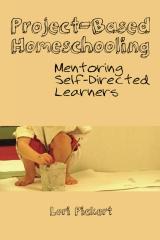
“The book spells out the different steps in implementing student-directed projects, and every chapter has an inspiring list of specific ideas/formats. My only complaint is I want more — I can’t wait to read what Pickert publishes next.”
“[A] must read for all parents and educators who are interested in raising/encouraging children to take charge of their education and make learning a lifestyle and not just a chore. This book is filled with practical advice…”
“There is so much practical, useful information in this book. … Pickert gives us the tools to be great mentors to our kids.”
“PBH actually assisted me in focusing on my own unique style and listening more closely to my own creative voice (as well as that of my children, and being less seduced by everything new and shiny when things lagged in our learning), not just as a parent, but as an individual. The positive impact that this focus has had in my personal and family life is profound.”
“I’ve noticed big changes in my child’s play since I began doing the things suggested, and I am utilizing it for my own projects!”
“In addition to teaching how to do project-based homeschooling it’s like a manual on how to live.”
“Do yourself a favor and read this book with a highlighter and pencil in hand.”
“PBH is hands down my favorite book on homeschooling.”
“Although the title says ‘Project-Based Homeschooling,’ it is really something that any parent could incorporate into their lives, homeschooling or regular schooling.”
“Brilliantly written book, easy to read, easy to follow, well organised, stuffed full of easy to follow and idea-provoking tips for enjoying learning and supporting children of all ages. ... As a librarian and advocate of life long learning, I can’t tell you what a joy this book is to read — affirming, inspiring and practical.”
“Her writing style is really accessible, witty and flows beautifully; she paints a picture of a world you can’t help but want to be a part of. This isn’t a vague philosophy, this is a how-to book that empowers parents to empower their children.”
“For those new to homeschooling and even those such as myself, who have been homeschooling for years, this book will be the one you have on hand at all times. Easy to read, intelligent, heartfelt, inspiring and honest!”
“Wonderful resource! This will help every parent to keep their children’s love of learning alive. Project Based Homeschooling will be a favourite for years to come in our home.”
“It has been an inspiration to our homeschool and to our daily life.”
.
“I can't recommend it highly enough.”
.
“[H]er new book … synthesizes so much wisdom about homeschooling from a project-based perspective.”
“[O]verflowing with ideas for any parent who’d like to encourage more self-directed learning in their kids.”
“Do yourself a favor and read this book with a highlighter and pencil in hand.”
.
.
.
“Anyone who considers themselves the ultimate guardian of their children’s education … will find ideas to think about and act upon.”
“[A] rare book that both inspired me to make changes in the way I homeschool and gave me the practical means to make them.”
“[T]his isn't just a homeschooling book. It is a guide to parenting.”
“What Pickert has done with her book is explain in an easy-to-read and practical manner what parents can do at home to ensure that children will take charge of their own education and gain essential skills. If that sounds far-fetched, I suggest you read the book.”
“There are only a handful of books that I can honestly say have changed my life. This … is one of those books.”
DISCLOSURE STUFF
I do not do any sponsored posts nor do I have any ads on the site.
I do not offer consulting services, but I would be happy to help you for free if you want to e-mail me or join the forum!
I am an Amazon Associate and I have linked a lot of references on the site to Amazon; if you buy anything there (anything at all, not just the linked item) I get a referral fee.
Or you can just enter Amazon through this MAGIC PORTAL and I will receive a tiny kickback if you buy anything at all!
Thank you for supporting PBH!
14 comments
I'm here, a little gun shy about saying anything but still I'm here.
We've discovered science experiments in the last few weeks. My job is to take the books out of the library and find the supplies. Alder checks out the pictures and chooses what he wants to do. Usually we have one official experiment that leads to an hour or two of his own variations.
It amazes me how frustrated I was six months ago just wanting him to be learning, to beyond our everyday lives now at 3.5 he is asking to do these things, I stay quiet as I can trying not to push him. It is so exciting to watch him learn.
I'm here!
We had such a great day of boundary pushing earlier this week - ice skating of all things.
As I've talked about before, Annika has Perfectionism Issues. We've had some incidents lately when she has been out on roller skates with her friends, and ended up in tears and angry because she couldn't keep up. The same friends invited my kids ice skating on Wednesday. They've been before, and mine never have been. I was VERY reluctant to take her and have her melt down again in front of everyone, because really - I'm so over her doing that. So we sat down and had a long talk about how she wasn't going to be in the same place as they were, skill wise, and she was going to need to be patient and work hard and only worry about herself instead of comparing where she was with everyone else. She knew that she'd be sitting in the warm room with the mommies at the first sign of a meltdown.
So we went. And she slowly made her way around the edge of the rink. She let go of the wall a few times. She came back in to get her skates tightened. And then she skated! She used the 'walker" when she got tired. Her friends helped her get up when she fell. Then she got herself up when she fell. She skated farther and faster and the grin got bigger.
She came in to take a break and said "Mom! The girl in the tutu fell down! Even really good skaters fall down!" and then went back out onto the ice. On the way home we talked about how no matter how good you are, you still fall down when you try new things and that you won't learn anything new if you're not willing to risk falling down.
So maybe it only applies to ice skating and we'll still be operating in the safe zone in other ways. But maybe, just maybe she'll apply the lesson elsewhere. I will be one happy mommy if she does.
Man, that was long. I should have turned it into a blog post and just linked it. Sorry!
stacey, that sounds wonderful! and why the heck are you gun shy?! ;^)
sarah, great story! i’m sure you can help her remember this when there’s a next time. :^) and re: long, i feel that way every other time i post a comment. :^P
copied this into my journal this afternoon..."at home...children spend most of their time at the frontiers of their learning." (from Educating Children at Home by Alan Thomas) isn't that a lovely image? at the frontiers. it's a good place to be.
Ok, I'll jump in. My son is only 2.5, so mostly we read A LOT and mess about with different materials (art and otherwise). I've always intended to homeschool him and any other kids we have, but I'm having such a hard time biting my tongue with our various art experiments when he does things differently than I intended, having such a hard time not pushing him, such s hard time with people that don't understand why we're not in classes every day, I despair at my ability to stay the course. It seems all too easy to hop on the carousel of preschool and endless enrichment activities. Sigh
Hi Lori,
I'm so glad I found your blog, it is such an inspiration.
I have been wanting to learn more about the Reggio approach and project-based learning. I know I still have time to figure things out since my son is only 15 months old, but I just wanted to gather as much information as possible. However, I'm starting to feel a little bit overwhelmed with all the information and I have no idea where and when to begin.
I was wondering how early can I start?
In addition to English, I also speak another language which is my first language. I really want him to know both languages equally well in terms of writing and speaking, but I'm a little bit unsure of how I should approach it. Should I use one of the languages as our main means of communication on a daily basis and treat the other as a foreign language, or should I alternate? I currently speak to him mainly in my mother tongue and my husband speaks English to him. If we choose to homeschool, I'll be the one who stays at home with him. I was wondering if you have any experiences with this and if so what are the pros and cons?
In the meantime what type of projects or activities would you recommend for a child at this age to sort of "prepare" them for the next step? I'm especially interested in anything that's art-related.
I didn't mean for my post to be this long, the questions were just pouring out of me as I started writing. Sorry about that.
Thank you for reading:)
kort, i love that. :^) that is a great place to be, and where we want them to be. i usually talk about kids being at their “challenge level” — the place where they are challenged just the right amount. it’s much easier at home to keep kids at that front edge of learning because, i think, that’s where they naturally gravitate — if their love of learning hasn’t been squashed out of them.
thank you!
hi anne :^)
it is too easy! it’s all out there and so much simpler to just choose prearranged activities...
it’s great to mess around and have open-ended art experiences, and that’s getting him ready for project work *and you* — since you have to practice hanging back and letting him take the lead. :^) really get into that role of observing and documenting and i think it becomes apparent 1, how much more learning he is doing when he grabs the controls and puts his own ideas into action and 2, how much more eager to work he’ll be when he’s following his own path rather than trying to do something the “right” way.
you can still join in on preschool activities if you find the right ones. my older son was in an open studio art class when he was two. he loved it. there were materials out for four or five different activities and kids could do with them what they wanted — though most of their parents sat with them telling them what to do!
funny how early you run into that parent v. parent, child v. child competition, isn’t it? just know that the things that will most drive them crazy is your confidence and simple enjoyment of life and your son. ;^)
kat, how early can you start? a great question.
i prepared a “curriculum guide” for a parent-education program where the children were toddlers too young for preschool. my focus was on laying the foundation for future project work — letting children become accustomed to working independently, making choices, free exploration of materials, etc. i would recommend the same to you: open-ended materials (e.g., blocks), high-quality art materials, a wide variety of recycled materials to cut/paste/tear/glue/paint, a wide variety of natural materials to extend block play, simple fabrics squares for playing dress-up, lots and lots of books... think along the lines of establishing attitudes and habits that will serve you later. try to arrange his environment so he can work independently (keeping toys in low containers so he can reach them and put them away again), let him explore art materials and have his own ideas, celebrate his work.
re: two languages, i have read quite a bit about this and i suggest you do some research online — i know people take strong sides about the best way to introduce that second language, and i can’t say which approach is best. being multilingual is a wonderful thing and well worth working toward!
hope this helps, and please feel free to ask for more specifics if i’ve been too vague! ;^)
thank you for commenting!
Thank you for the answer to Kat's question. This helps me believe we're on the right track, as long as I can sit on my hands and keep my mouth shut!! I cannot believe how hard that is, even when I know it's best.
anne, i know! it just goes to show how much training we have absorbed ..
there is a right way and a wrong way and you should do things the right (planned) way ..
teachers teach; students follow directions ..
adults know more than kids ..
and on and on. and we learn these *as* children, then turn around and perpetuate them as adults. interesting.
hard habits to break, but very worth it!
To Kat: Can I recommend that one of the places you look for information on raising a bilingual child is here?: http://www.bilingualism-matters.org.uk/faq.html
It is a page based on a pamphlet written for the Linguistic Association of America by two colleages of mine, Prof. Antonella Sorace and Prof. Bob Ladd, who in addition to being linguists, and experts in the field of language acquisition, and in particular bilingual language acquisition, are a married couple who have raised two bilingual sons.
Good luck! My own reading in and around the area of bilingual language acquisition (reading for my own research) shows it to be terrifically beneficial for both child and parent.
cassie, thank you for the great advice!
http://www.ted.com/talks/lang/eng/kiran_bir_sethi_teaches_kids_to_take_charge.html
thought you might enjoy.
Lori and Cassie, thank you for the advice!
mary, thank you! i hadn’t watched that one! :)
Post new comment