
They know what to do
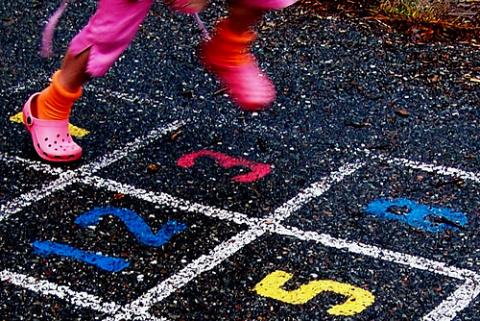
We had to keep telling ourselves to trust the children, they would know what to do. We just had to hold the space for them. — Reclaiming the Streets for Kids
There’s no difference in learning — if we trust the children (and the process) and hold the space for them, they know what to do.


User login


Most Recent Entries
read the blog archive
get our free weekly newsletter
Book

“The book spells out the different steps in implementing student-directed projects, and every chapter has an inspiring list of specific ideas/formats. My only complaint is I want more — I can’t wait to read what Pickert publishes next.”
“[A] must read for all parents and educators who are interested in raising/encouraging children to take charge of their education and make learning a lifestyle and not just a chore. This book is filled with practical advice…”
“There is so much practical, useful information in this book. … Pickert gives us the tools to be great mentors to our kids.”
“PBH actually assisted me in focusing on my own unique style and listening more closely to my own creative voice (as well as that of my children, and being less seduced by everything new and shiny when things lagged in our learning), not just as a parent, but as an individual. The positive impact that this focus has had in my personal and family life is profound.”
“I’ve noticed big changes in my child’s play since I began doing the things suggested, and I am utilizing it for my own projects!”
“In addition to teaching how to do project-based homeschooling it’s like a manual on how to live.”
“Do yourself a favor and read this book with a highlighter and pencil in hand.”
“PBH is hands down my favorite book on homeschooling.”
“Although the title says ‘Project-Based Homeschooling,’ it is really something that any parent could incorporate into their lives, homeschooling or regular schooling.”
“Brilliantly written book, easy to read, easy to follow, well organised, stuffed full of easy to follow and idea-provoking tips for enjoying learning and supporting children of all ages. ... As a librarian and advocate of life long learning, I can’t tell you what a joy this book is to read — affirming, inspiring and practical.”
“Her writing style is really accessible, witty and flows beautifully; she paints a picture of a world you can’t help but want to be a part of. This isn’t a vague philosophy, this is a how-to book that empowers parents to empower their children.”
“For those new to homeschooling and even those such as myself, who have been homeschooling for years, this book will be the one you have on hand at all times. Easy to read, intelligent, heartfelt, inspiring and honest!”
“Wonderful resource! This will help every parent to keep their children’s love of learning alive. Project Based Homeschooling will be a favourite for years to come in our home.”
“It has been an inspiration to our homeschool and to our daily life.”
.
“I can't recommend it highly enough.”
.
“[H]er new book … synthesizes so much wisdom about homeschooling from a project-based perspective.”
“[O]verflowing with ideas for any parent who’d like to encourage more self-directed learning in their kids.”
“Do yourself a favor and read this book with a highlighter and pencil in hand.”
.
.
.
“Anyone who considers themselves the ultimate guardian of their children’s education … will find ideas to think about and act upon.”
“[A] rare book that both inspired me to make changes in the way I homeschool and gave me the practical means to make them.”
“[T]his isn't just a homeschooling book. It is a guide to parenting.”
“What Pickert has done with her book is explain in an easy-to-read and practical manner what parents can do at home to ensure that children will take charge of their own education and gain essential skills. If that sounds far-fetched, I suggest you read the book.”
“There are only a handful of books that I can honestly say have changed my life. This … is one of those books.”
DISCLOSURE STUFF
I do not do any sponsored posts nor do I have any ads on the site.
I do not offer consulting services, but I would be happy to help you for free if you want to e-mail me or join the forum!
I am an Amazon Associate and I have linked a lot of references on the site to Amazon; if you buy anything there (anything at all, not just the linked item) I get a referral fee.
Or you can just enter Amazon through this MAGIC PORTAL and I will receive a tiny kickback if you buy anything at all!
Thank you for supporting PBH!
10 comments
I've totally seen this with Alder this year. We really haven't sat down and done much schooling, just a few hours a week of math and reading oriented stuff. Still when I look at scope and sequences for kindergarten outcomes he's right on target or ahead. But that's just the conventional stuff. Over the past three years I have watched as he has asked for learning activities to fill his interests and needs. So we've built geodesic domes and baked cakes. We've also sat down and done arithmetic and practice reading. All of this because he has asked for it.
So often you hear that kids won't learn unless it is pressed on them, almost as if children are a different species as the adults teaching them. While I don't think that children are merely small inexperienced adults I do think that it is their nature to be curious and to crave the tools to help them discover what they want to know.
"I do think that it is their nature to be curious and to crave the tools to help them discover what they want to know." — yes. this.
adults expect children to submit to a type of learning that they themselves would never put up with. as an adult, if someone tried to not only forcefeed you information but do it a slow spoonful at a time, it would drive you insane.
this quote goes back to the trust issue for me — many adults have a hard time believing that children will fill that space and fill it well. they are so nervous about it, they rush to fill it up for them. in my experience, if an adult gets the chance to see self-directed learning work, they quickly set out to make it happen as often as possible. the key is to get them to risk enough to have that first positive experience.
Part of the problem I see is that most adults in today's world, even teachers. Don't ever get to experience this sort of interest based learning in their own lives. Only recently has "life learning" become a catch phrase and so many times it's only canned learning for the adults too (just look at the list at the local "free" university). As a culture Americans are so used to being handed things prepackaged that it really takes a shift in understanding, or bravery to go beyond that.
Last year I was running an online creativity workshop and I was amazed by how many of the women had never thought of using their cameras for anything other than recording events and project. All I told them was to take pictures of the things that they saw out of the corner of their eyes rather than the actual subjects. It was just a small comment but it was so foreign to them. Then a few months ago I read an article about how some people were wired to value fitting in and others were to value being different (as in brain wiring) it made a lot more sense to me after reading that. Even though I am not sure I believe it completely.
that sounds really interesting — i’d like to read that article! one thing i notice is how people get so interested in trends — they seem to move together in groups to do new activities. “i see a lot of people doing that — i could try that.” i don’t see many people popping up with odd, individual hobbies or things they’re passionate to know more about. (maybe they just don’t talk about them!) i know that even as an adult, i’ve been called out for being a nerd for having esoteric interests. i was called out by a *librarian* for being overly studious when i ordered a big stack of books on a subject i was interested in. :^/
i agree about the adults, even teachers, not having any experience seeing this kind of learning in action (or experiencing it for themselves). after all, most adults — including most people who go into the teaching profession — get a normal education. and studies show that most people stop learning after they get out of school. (a ridiculously large number of people never read a book again, for example.) but it makes sense that people aren’t going to suddenly start deeply investigating their interests if they have no experience ever having done so in the past. i’m always quoting an editorial in the Trib written by a consultant who helped Chicago-area parents get their kids into ivy-league colleges. he said the kids he met — from the best schools, with the best grades — *had* no interests. no interests and no opinions.
it makes sense to me, too, that the people most likely to want to become teachers are people who enjoyed school *as they experienced it*. therefore, it’s a self-perpetuating system. the kind of people who enjoy creative, free, independent learning are probably not going to consider becoming schoolteachers if they themselves didn’t experience that kind of learning in school. if they experience the kind of ordinary school i attended, they would believe that type of learning to be the antithesis of “school.”
your experience with your creativity workshop is fascinating to me. did you feel like the people involved did grow in their creativity over the course? did you awaken that part of their brain?
I do think the individuals with odd, individual hobbies are less likely to talk about them. I know that is the case for myself. Funny that I was just thinking today that I should share more of the things I am interested in... and they are not even *that* odd!
Just as a side... I hated school and became a teacher because I wanted to try to make it a better place for kids. I did not last long but hope I made a difference in a few lives. I think you are right in that the teachers that last are the ones that are commited to "the system." Even if there are some who would like to see in change a bit.
i know there are a portion of new teachers who hope to change the status quo, but i think they are the ones who struggle the most, because the majority of teachers are just fine with the status quo. the ones who are fine with things the way they are seem, as you say, to be the ones who last the longest in the job. that makes sense to me — it's incredibly hard work trying to change things. and disheartening when you can't find colleagues who feel the same way.
now i want to know about your odd hobbies, dawn... ;o)
"your experience with your creativity workshop is fascinating to me. did you feel like the people involved did grow in their creativity over the course? did you awaken that part of their brain?"
Some did, one in particular have gone on to really focus some of her energy on photography. What surprised me more was how many people signed up (it was a free one I offered through a local AP group so I could practice teaching them) for the course and then said it was too much of a commitment. The entire thing was online with a once a week prompt, and while people could use and medium they wanted I tried to focus on photography and poetry both which seem "quick". Some of the women seemed stuck with the idea that the camera was just a recording device which they didn't use as a artistic tool.
But despite what I saw I know that most of the women felt that they had opened a new way of looking at the world. Even if it was just briefly.
it’s interesting that they had the *desire* to be more creative in the first place. “too much of a commitment” is curious, too — i wonder if they meant the time involved (because it doesn’t seem like much) or the need to dig down to that creative place.
I think it wasn't the time it would take to do the actual projects but the time it would take to open themselves up or shift how they were looking at the world. As a creative person I am always seeing stories or pictures in the world around me but I guess that just isn't how everyone views the world.
i’ve seen that a lot of people fear change — they fear opening themselves up in a way that’s needed for creative outlet. maybe they’re afraid of what might come out.
Post new comment