





User login
Most Recent Entries
read the blog archive
get our free weekly newsletter
Book
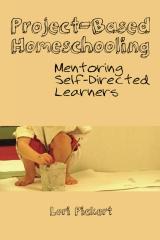
“The book spells out the different steps in implementing student-directed projects, and every chapter has an inspiring list of specific ideas/formats. My only complaint is I want more — I can’t wait to read what Pickert publishes next.”
“[A] must read for all parents and educators who are interested in raising/encouraging children to take charge of their education and make learning a lifestyle and not just a chore. This book is filled with practical advice…”
“There is so much practical, useful information in this book. … Pickert gives us the tools to be great mentors to our kids.”
“PBH actually assisted me in focusing on my own unique style and listening more closely to my own creative voice (as well as that of my children, and being less seduced by everything new and shiny when things lagged in our learning), not just as a parent, but as an individual. The positive impact that this focus has had in my personal and family life is profound.”
“I’ve noticed big changes in my child’s play since I began doing the things suggested, and I am utilizing it for my own projects!”
“In addition to teaching how to do project-based homeschooling it’s like a manual on how to live.”
“Do yourself a favor and read this book with a highlighter and pencil in hand.”
“PBH is hands down my favorite book on homeschooling.”
“Although the title says ‘Project-Based Homeschooling,’ it is really something that any parent could incorporate into their lives, homeschooling or regular schooling.”
“Brilliantly written book, easy to read, easy to follow, well organised, stuffed full of easy to follow and idea-provoking tips for enjoying learning and supporting children of all ages. ... As a librarian and advocate of life long learning, I can’t tell you what a joy this book is to read — affirming, inspiring and practical.”
“Her writing style is really accessible, witty and flows beautifully; she paints a picture of a world you can’t help but want to be a part of. This isn’t a vague philosophy, this is a how-to book that empowers parents to empower their children.”
“For those new to homeschooling and even those such as myself, who have been homeschooling for years, this book will be the one you have on hand at all times. Easy to read, intelligent, heartfelt, inspiring and honest!”
“Wonderful resource! This will help every parent to keep their children’s love of learning alive. Project Based Homeschooling will be a favourite for years to come in our home.”
“It has been an inspiration to our homeschool and to our daily life.”
.
“I can't recommend it highly enough.”
.
“[H]er new book … synthesizes so much wisdom about homeschooling from a project-based perspective.”
“[O]verflowing with ideas for any parent who’d like to encourage more self-directed learning in their kids.”
“Do yourself a favor and read this book with a highlighter and pencil in hand.”
.
.
.
“Anyone who considers themselves the ultimate guardian of their children’s education … will find ideas to think about and act upon.”
“[A] rare book that both inspired me to make changes in the way I homeschool and gave me the practical means to make them.”
“[T]his isn't just a homeschooling book. It is a guide to parenting.”
“What Pickert has done with her book is explain in an easy-to-read and practical manner what parents can do at home to ensure that children will take charge of their own education and gain essential skills. If that sounds far-fetched, I suggest you read the book.”
“There are only a handful of books that I can honestly say have changed my life. This … is one of those books.”
DISCLOSURE STUFF
I do not do any sponsored posts nor do I have any ads on the site.
I do not offer consulting services, but I would be happy to help you for free if you want to e-mail me or join the forum!
I am an Amazon Associate and I have linked a lot of references on the site to Amazon; if you buy anything there (anything at all, not just the linked item) I get a referral fee.
Or you can just enter Amazon through this MAGIC PORTAL and I will receive a tiny kickback if you buy anything at all!
Thank you for supporting PBH!
10 comments
I love that quote! My favorite part of working with my kids is learning with them. I don't remember too many teachers who seemed excited about new ideas, though. I know when I was trained to teach I wanted to be that way, but it was always a struggle to actually do it that way in the "real" world of tests and accountability.
"data transmission"--what a great way to describe it. I think of the image of opening up the child's head and pouring in knowledge--the empty vessel waiting to be filled. Not really what I'm trying to do! The discoveries my kids make themselves are the ones they remember. And it's tough, because my 7yo has always been big on questions, and I try to answer them, which sometimes feels like data transmission. But I've noticed he always repeats what he's heard back to me, in his own words, still making the information his own.
Whew! That puts the pressure on, doesn't it? I suppose if we hope to teach by example, and we want our children to be creative, then we have to be creative ourselves, right? It makes sense.
hope this'll quicken someone
oh, kerry, i agree it’s hard to do in today’s typical public school ... so this quote is something we need parents and politicians and administrators to ponder. if we want things for our children, can teachers today with the limits placed on them by our schools deliver them? are we preparing kids for 2030?
amy, i think all you need to do is try to help him find his own answers as much as possible rather than just answering them straight out ... you have a kid made for inquiry-based learning! :^)
theresa, lol, the pressure is on! we are, after all, our children’s first, best model of how to interact with the world. whatever we want for them, don’t we need to want those things for ourselves as well? and how better to teach than by example? if we say but don’t do .. what will they follow?
Lori, i'm a designer at an educational publishing company. I've recently been having these long "discussions" about the best ways to teach young children. And I'm generally disappointed with many of the decisions that are being made by the decision makers. They are pretty rigid and single minded, stuck in a textbook rut. I'm inspired by the observations and experiences that you're sharing here. These are the types of learning experiences that I hope for my children to have.
jeannine, thank you so much.
there is an interesting article in the new national geographic traveler about complex systems and “system accidents”, a term coined by sociologist charles perrow. it talks about self-organizing systems and how a lot of people in a large system, each doing their smallish, fairly simple bit, can come together to make a system that can go terribly wrong. the article talks about a climbing incident that led to multiple deaths and also our economy. i, of course, thought of all the different people who come together to make our huge educational system.
my colleagues and i used to sit around and discuss how best to change the system -- inspire the parents? convince the administrators? get the educational programs to change their curricula? inspire and support the teachers? unfortunately, i don’t think changing any •one• of these things makes a difference, if the other parts are working against you.
thank you so much for your comment -- i really appreciate it.
this is so good, and convicting and inspiring and encouraging...all of that!! :)
Sorry I disappeared on our DMing on twitter yesterday. I shoot you an email soon so we can catch up. miss talking to you!
xo.
I like to think of the conversations the old philosophers had with their pupils when i think of a teacher. In this way learning involves two and both teacher and pupil learn. And there's that saying that's something like 'in a conversation between a wise man and a fool, who learns the most?'. Our children have so much to teach us, we just have to know how to listen and learn.
hi, mol ;^)
ali, yes, exactly. if a teacher feels they have nothing left to learn, what message does that send? and it’s not just the children who teach us; we can teach ourselves, just as we want them to learn to teach themselves. everyone says they want to raise “life-long learners” .. the easiest way to do that has to got to be *being* a life-long learner yourself. *really* still learning, in a way that is obvious to your children.
Post new comment