Documenting children’s work: pre-project
Pam left a nice, meaty comment on an earlier post asking, in part,
“My problems — how do I explain brainstorming to them? When I ask what would you like to learn about ______ I mostly get a blank stare. … How do I get them moving in the right direction?”
And a bit of my answer —
“With younger children, it really doesn’t work to sit down and ask what they want to study — unless they already have a few major projects under their belt.
Rather, you should begin observing their play, conversations, questions, etc., and documenting everything in your journal. Take copious notes and review them after you have documented several different segments of time. Look for patterns and possible project topics — interests, questions, etc. This is a much more reliable way to identify possible project topics with very young children — and even older children who have no experience with projects. (Children aren’t always the best at identifying their own authentic interests … especially if they haven’t had any experience learning in this way.)”
Documenting children at work and at play (often one and the same) is a learned skill.
A few tips for documenting:
Sit off to the side, unobstrusive, and don’t talk to your children or interfere. This isn’t the time to interview them or ask them questions. You want to be quiet and pay close attention and write down what you see and what you hear.
Try not to edit what you are seeing or write it down with your own ideas and thoughts on what is happening — make it as plain and true an account as you can. Be a dispassionate journalist. Interpretation comes later.
Document your children over several days, during several different times of day or activities (e.g., talk at mealtime, playing indoors, playing outdoors, doing free art).
If your children stop playing and are distracted by your presence and your note-taking, don’t worry; they will get used to it. Simply tell them you are doing some work and watching them. This is a different way of giving them your attention, and they will come to realize it reflects the importance of their work and play.
Take photographs to put in your journal with your words; you may see things later that aren’t so obvious now.
Don’t just note what the children are doing — note the time of day, copy snippets of their speech (and not only what seems “important” — just get a good representation of what they were saying/talking about, whether it seems important now or not), note what materials they are using and how, etc.
After you have collected a good deal of data, you can sit down to reflect on what you’ve seen and heard. You may experience some interesting relevations. You are looking for patterns, repetition, questions, misunderstandings, and strong interests. These are the raw materials that can make the beginning of a long-term investigation.
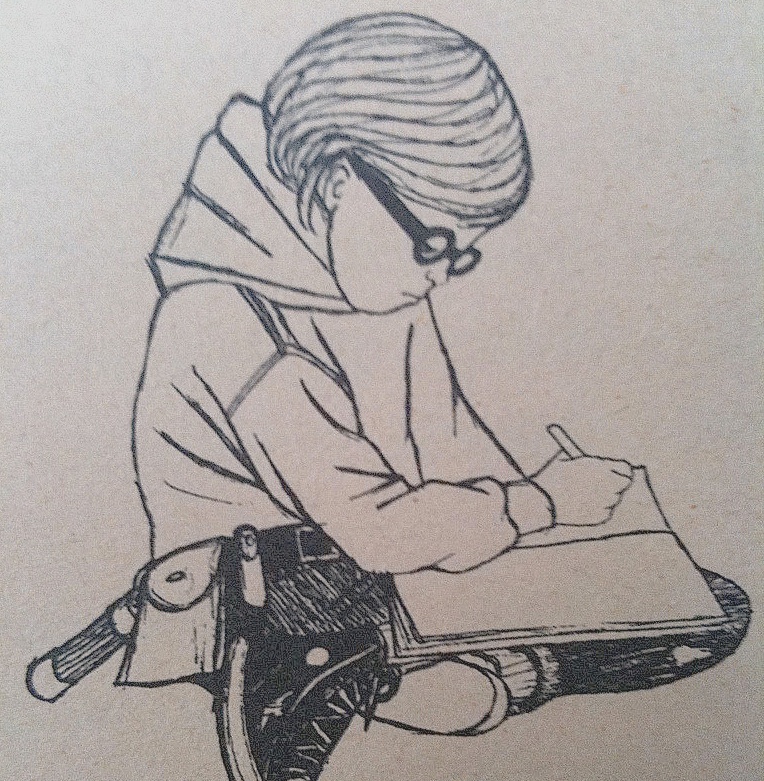
Image from Harriet the Spy. “[Harriet] never minded admitting she didn't know something. So what, she thought; I could always learn.”
Related posts:
White Space as a Learning Tool





User login





Most Recent Entries
read the blog archive
get our free weekly newsletter
Book
“The book spells out the different steps in implementing student-directed projects, and every chapter has an inspiring list of specific ideas/formats. My only complaint is I want more — I can’t wait to read what Pickert publishes next.”
“[A] must read for all parents and educators who are interested in raising/encouraging children to take charge of their education and make learning a lifestyle and not just a chore. This book is filled with practical advice…”
“There is so much practical, useful information in this book. … Pickert gives us the tools to be great mentors to our kids.”
“PBH actually assisted me in focusing on my own unique style and listening more closely to my own creative voice (as well as that of my children, and being less seduced by everything new and shiny when things lagged in our learning), not just as a parent, but as an individual. The positive impact that this focus has had in my personal and family life is profound.”
“I’ve noticed big changes in my child’s play since I began doing the things suggested, and I am utilizing it for my own projects!”
“In addition to teaching how to do project-based homeschooling it’s like a manual on how to live.”
“Do yourself a favor and read this book with a highlighter and pencil in hand.”
“PBH is hands down my favorite book on homeschooling.”
“Although the title says ‘Project-Based Homeschooling,’ it is really something that any parent could incorporate into their lives, homeschooling or regular schooling.”
“Brilliantly written book, easy to read, easy to follow, well organised, stuffed full of easy to follow and idea-provoking tips for enjoying learning and supporting children of all ages. ... As a librarian and advocate of life long learning, I can’t tell you what a joy this book is to read — affirming, inspiring and practical.”
“Her writing style is really accessible, witty and flows beautifully; she paints a picture of a world you can’t help but want to be a part of. This isn’t a vague philosophy, this is a how-to book that empowers parents to empower their children.”
“For those new to homeschooling and even those such as myself, who have been homeschooling for years, this book will be the one you have on hand at all times. Easy to read, intelligent, heartfelt, inspiring and honest!”
“Wonderful resource! This will help every parent to keep their children’s love of learning alive. Project Based Homeschooling will be a favourite for years to come in our home.”
“It has been an inspiration to our homeschool and to our daily life.”
.
“I can't recommend it highly enough.”
.
“[H]er new book … synthesizes so much wisdom about homeschooling from a project-based perspective.”
“[O]verflowing with ideas for any parent who’d like to encourage more self-directed learning in their kids.”
“Do yourself a favor and read this book with a highlighter and pencil in hand.”
.
.
.
“Anyone who considers themselves the ultimate guardian of their children’s education … will find ideas to think about and act upon.”
“[A] rare book that both inspired me to make changes in the way I homeschool and gave me the practical means to make them.”
“[T]his isn't just a homeschooling book. It is a guide to parenting.”
“What Pickert has done with her book is explain in an easy-to-read and practical manner what parents can do at home to ensure that children will take charge of their own education and gain essential skills. If that sounds far-fetched, I suggest you read the book.”
“There are only a handful of books that I can honestly say have changed my life. This … is one of those books.”
DISCLOSURE STUFF
I do not do any sponsored posts nor do I have any ads on the site.
I do not offer consulting services, but I would be happy to help you for free if you want to e-mail me or join the forum!
I am an Amazon Associate and I have linked a lot of references on the site to Amazon; if you buy anything there (anything at all, not just the linked item) I get a referral fee.
Or you can just enter Amazon through this MAGIC PORTAL and I will receive a tiny kickback if you buy anything at all!
Thank you for supporting PBH!
19 comments
thank you for these tips. as h. is getting older i feel i need to start documenting and figuring out where his 'serious' interests may lie. not so much for him as for me and how to equip ourselves with the tools we might use in the near future. since he is not yet of school age i think practicing this and making it routine now will be so helpful in the future. i am not one to keep a diary or journal, but incorporating the pictures i think will be helpful and make it easier for me.
the caption for the image is so great. one of the best things my mom ever taught us was to never be afraid to ask a question. and it is true. you CAN always learn.
Another excellent blog - particularly for me as you've focussed on little children. I get quite excited when I see a new blog from you in the reader. I look forward to doing this with my daughter,
gonzomama, yes, although 3- and 4-year-olds are very capable of doing really deep, long-term project work, the most important thing is to start early with the attitudes toward work, problem-solving, sharing, communicating, etc. etc.
the journal as i use it isn’t like a typical write-it-all-out diary, but more like a collection of data, making it possible to keep track of everything! :^)
i love that quote from harriet, too! the perfect attitude toward learning. :^)
thank you, kristine! let me know how it goes! :^)
very helpful post. thanks for laying it out so clearly. i struggle with the play and work being together sometimes. when they go to the legos more than or always before the pencil and paints. i don't usually sit and listen to them when they set-up their amazing lego scenes. that is something i'm going to try.
p.s. i'm still mulling over your post about media. not sure where i stand with the issue of self-regulation. do 7 and 5 year old boys know how to do that?
children process their thoughts, ideas, etc., through play … legos are a great open-ended construction toy/material for project work! mm, funny, this relates to the whole good media/bad media thing. kids need to have opportunities and choice and the freedom to move among them; we need to work to understand how they are expressing themselves in the different "languages".
do 7- and 5-year-old boys know how to self-regulate? the question for me is, how will they know how to self-regulate when they are 13 and 11 if we don’t start helping them learn that skill now? i think you start from a place of balance, so they can experience that and know what it feels like, then you gradually allow them more control. again, this relates to project work … how can teenagers make good decisions, handle failure, know their own talents and interests, etc., if we don’t help them get experience with these things all along the way?
back to legos … if you were doing a project, legos would be a great material to incorporate. then you could mix legos with hand-made props/constructions, mix legos with art supplies, mix legos with a digital camera and/or a camcorder … and good old ordinary (but wonderful) free play is a perfect way for children to explore what they know, what they think they know, what their questions are, etc., which is why observing them at play can be so fruitful for doing deeper project work! :^)
thanks for your great comment, nancy!
Thank you for these last 3 posts. I enjoyed reading them very much that I'm keeping them in a file to refer back to . Our world is so fast paced that the more we give our children the smarter they'll be or something? These last couple of posts only enforce what we do as a family to live simple and a little boredom is ok but this article helped me with understanding one of my children's boredom and take a step back and observe and initiate something based on their interest.
Lori-
I have recently started documenting my 5 and 7 year old girls, however, I never pay attention when they sit down with their Calico Critters (similar to play mobile but not plastic) for hours at a time playing house. They play for so long...:o) I use the time for my break. I am going to sit down today and document it and see what I discover.
My kids have so many interests. I bought them project journals and they mostly use them to draw in:o) :o)
Thanks for the inspiration!
jess
thank you, luisa! i think this is tied to the conversation on limits because they both require getting past the idea that some of kids’ activities are less valuable/less worth our attention or their time. it’s good to closely examine these ideas/prejudices and figure out if we’re missing out on something great.
jess, what a great idea. those are the times that really interesting things can be revealed. when i started documenting kids in the classroom, i was really surprised by how much they pulled into their play — what we were reading, what was happening at home, things that had happened earlier in the day. they play to process. it can open up so many possibilities for further exploration.
it’s great to have a lot of interests! but of course i am always encouraging you to pick one and dig a little deeper. ;^) and hey, you can always get another journal … lol.
thank YOU!! xoxo
My last comment here was so bitter in tone I thought I'd come back and tell you I've removed my son from high school. He's FREE. He's doing school work to earn the credits he needs but without the constant petty discipline problems and damage to his self-esteem. Thank you for keeping me believing and keeping me open to homeschool!
lisa, so glad things are looking up for you and your son! :^)
Just wanted to come back and thank you for your response to my question. It really helped to clarify some of the questions that I had. I would love to see some projects that have been done by young children -- especially in a homeschool setting if you know of any that might be out there.
I am going to try the observation. I am usually nursing a baby while they play, but I can observe even if I can't immediately write it all down. It will be interesting to see where this leads.
Speaking of --- baby crying...
Pam
Man oh man, I am so pleased you are posting again. Your posts always provoke such fruitful scrutiny for me. Always. And they are always so relevant to something happening in our lives.
Especially love the recent discussion about limits. Seems like whenever I start to clamp down a little bit I am gently reminded from the universe to ease up and let this boy enjoy being a child.
Nice to *hear* your voice again!
good good GOOD stuff.
i'm so glad i found you.
pam, i’m sure you can write a few brief notes while nursing. ;^)
let me know how it goes!
thank you, amy!! :^) it’s good to “see” you, too. ;^)
thank you, estea. ;^) xo
Hi Lori,
Do you have any posts on *how* to dig deeper with a project? Like I said my kids have many many interests. Every time we go to the library we come back with 60+ books, not even kidding you:o) I tried to limit them and they thought that was a horrible idea. They do have books they get more often than others. Anyway to get them to dig deeper...am I involved? Can I suggest things or ?? I guess I am learning my bounderies.
For example...My 7 year old loves castles. She has read a lot of books and made a castle out of cardboard. She also looked up castles on google and stumbled across some of the castles in England. Immediately she wanted to go visit a castle, which of course takes some planning and saving. So we won't be doing that now. What could I do the help her dig deeper??
I started documenting my girls play this week and it was incredible! They started this thing where they create drawings/collages.. at the same time, it's like they are creating a story together. They go back and forth with each other, taking turns drawing something or gluing something down while creating a story, if that makes sense. I should find a recorder to record the stories, they talk so fast:o) :o)
Well once again thanks for creating such an amazing blog. It has helped us in so many ways!!:o)
Oh yes we put the craft book you recommended on hold at the library and while looking it up we found a few more great books! :) thanks!
jess
hi jess — so glad to hear the documenting went well! :^)
and you should try the recorder! i'll only warn you that the tapes tend to pile up. if you don't have time to listen to them all the way through, you should also take notes as fast as you can — that way you can go back to the tape if you want to, but you don't have to try to transcribe hours of play/work. :^)
check out the new comment i received and answered at the bottom of the project-based homeschooling post and see if that helps you:
http://www.whiteoakschool.com/camp-creek-blog/2008/10/2/project-based-homeschooling.html#comment7011866
let me know if you have other, more specific questions — and let me know how it goes!
Hi Lori;
Thank you for this post! I have a question re interests and younger children (round 2-4years old): Can interests be related to what they have around them - I mean do their interest come from the "world" (ie home generally) around them - so, does this mean that we must have tonnes of different things for them to play with in order for their interests to develop? What am I trying to say here?
I mean do we (parents /carers) influence the interests children may develop by the things we give them or toys/books/tv they have around them or the experiences we provide them with? How can we ensure that we are providing what they need in order to develop interests that are not necessarily our (parents/carers) interests?!
Its fantastic reading your entries, thought provoking.
Thank you!
Mags
So happy to see you're a Whovian too!! That's all.
yes, yes i am. :)
Post new comment