If you want to discover something other people haven’t
How do you fail constructively?
We’re taught to do things the right way. But if you want to discover something that other people haven't, you need to do things the wrong way. Initiate a failure by doing something that's very silly, unthinkable, naughty, dangerous. Watching why that fails can take you on a completely different path. It's exciting, actually. To me, solving problems is a bit like a drug. You're on it, and you can't get off. — Failure Doesn’t Suck (Sir James Dyson interview)





User login



Most Recent Entries
read the blog archive
get our free weekly newsletter
Book
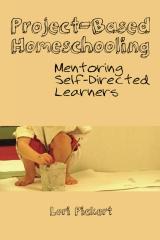
“The book spells out the different steps in implementing student-directed projects, and every chapter has an inspiring list of specific ideas/formats. My only complaint is I want more — I can’t wait to read what Pickert publishes next.”
“[A] must read for all parents and educators who are interested in raising/encouraging children to take charge of their education and make learning a lifestyle and not just a chore. This book is filled with practical advice…”
“There is so much practical, useful information in this book. … Pickert gives us the tools to be great mentors to our kids.”
“PBH actually assisted me in focusing on my own unique style and listening more closely to my own creative voice (as well as that of my children, and being less seduced by everything new and shiny when things lagged in our learning), not just as a parent, but as an individual. The positive impact that this focus has had in my personal and family life is profound.”
“I’ve noticed big changes in my child’s play since I began doing the things suggested, and I am utilizing it for my own projects!”
“In addition to teaching how to do project-based homeschooling it’s like a manual on how to live.”
“Do yourself a favor and read this book with a highlighter and pencil in hand.”
“PBH is hands down my favorite book on homeschooling.”
“Although the title says ‘Project-Based Homeschooling,’ it is really something that any parent could incorporate into their lives, homeschooling or regular schooling.”
“Brilliantly written book, easy to read, easy to follow, well organised, stuffed full of easy to follow and idea-provoking tips for enjoying learning and supporting children of all ages. ... As a librarian and advocate of life long learning, I can’t tell you what a joy this book is to read — affirming, inspiring and practical.”
“Her writing style is really accessible, witty and flows beautifully; she paints a picture of a world you can’t help but want to be a part of. This isn’t a vague philosophy, this is a how-to book that empowers parents to empower their children.”
“For those new to homeschooling and even those such as myself, who have been homeschooling for years, this book will be the one you have on hand at all times. Easy to read, intelligent, heartfelt, inspiring and honest!”
“Wonderful resource! This will help every parent to keep their children’s love of learning alive. Project Based Homeschooling will be a favourite for years to come in our home.”
“It has been an inspiration to our homeschool and to our daily life.”
.
“I can't recommend it highly enough.”
.
“[H]er new book … synthesizes so much wisdom about homeschooling from a project-based perspective.”
“[O]verflowing with ideas for any parent who’d like to encourage more self-directed learning in their kids.”
“Do yourself a favor and read this book with a highlighter and pencil in hand.”
.
.
.
“Anyone who considers themselves the ultimate guardian of their children’s education … will find ideas to think about and act upon.”
“[A] rare book that both inspired me to make changes in the way I homeschool and gave me the practical means to make them.”
“[T]his isn't just a homeschooling book. It is a guide to parenting.”
“What Pickert has done with her book is explain in an easy-to-read and practical manner what parents can do at home to ensure that children will take charge of their own education and gain essential skills. If that sounds far-fetched, I suggest you read the book.”
“There are only a handful of books that I can honestly say have changed my life. This … is one of those books.”
DISCLOSURE STUFF
I do not do any sponsored posts nor do I have any ads on the site.
I do not offer consulting services, but I would be happy to help you for free if you want to e-mail me or join the forum!
I am an Amazon Associate and I have linked a lot of references on the site to Amazon; if you buy anything there (anything at all, not just the linked item) I get a referral fee.
Or you can just enter Amazon through this MAGIC PORTAL and I will receive a tiny kickback if you buy anything at all!
Thank you for supporting PBH!
8 comments
Sadly we are developing a society of people who only have a negative view of failure because it simply means not passing, not moving on to the next grade, not getting the promotion/raise in the job you hate (because it's not about the authenticity and creativity of the work it's about the promotion & money and the status that comes with it.) It becomes all about "not failing" instead of living and learning to the fullest.
My husband talks about a coach he once had who "played not to lose." I thought that was an interesting concept and this made me think of that idea.
i would go so far as to say people think failure is not even tolerable anymore. this is how we end up with a high school class with several valedictorians — people will only accept winning. so, of course, it makes winning meaningless. (or at least dilutes its significance.)
if you've ever seen a school that is concentrating on getting its kids to pass their standardized tests, it's all about YOU CAN DO IT and WE ARE WINNERS. if *that* is the main goal that we're focusing on in school, then we are *not* focusing on things like scientific method (hypothesis, then experimentation, revising original ideas, etc.), creativity, experimentation, collaboration, etc.
"playing not to lose" — what a great mental picture. no more aim for the stars — aim for the ceiling. that way you won't fail!
I think the same is true of risk taking. I guess I'm especially referring to physical risks here, like climbing a tree or using a hammer or balancing across the rocks in a stream. I think we're so quick to say "that's too dangerous" or "you might get hurt" instead of firstly - believing in a child's natural competence and self regulation, and secondly - allowing a mistake to be made so that real learning can occur. I think we need to be prepared to burst more of the bubble wrap we all too often roll our our kids into.
david, i know you'll appreciate this story. in our preschool classroom we had baby food jars (glass) full of colored water for the children to use on the light table. some visiting teachers were aghast — you let the children have *glass*? what if it *breaks*?! i said, well, if it breaks, we clean it up. they were shaking their heads. then they watched the children (three and four years old) working and how carefully they used the materials, including getting them out and putting them away again. afterward, one of them said, "this is fine for *your* students, but *our* students could never handle it." so even when they saw that the children could adapt and be responsible and *rise to the level of our expectations*, they still rejected it!
"allowing a mistake to be made so that real learning can occur" — THIS!
You're right...I did appreciate the story!! ;)
Grrrr...it's so frustrating when you hear people (especially other teachers) say "this is fine for *your* students, but *our* students could never handle it." Where are the expectations? What is their 'image of the child'? This links in for me with your next Blog post about time. So many teachers say "But I don't have the time to do that!"...Sure there are pressures...I don't deny that...but everything is a choice. If I value something, I MAKE THE TIME and then back up why I have made that choice by being very explicit with what my values and expectations are.
i think what frustrates me most is how they shut it down before they've even tried it. if they sincerely give it a shot and it doesn't work for you, that's one thing. but if you say "my kids couldn't handle this" and don't even try, then you're working off bias rather than data.
this reminds me of the thoreau quote — his wish "to drive life into a corner, and reduce it to its lowest terms, and, if it proved to be mean, why then to get the whole and genuine meanness of it, and publish its meanness to the world; or if it were sublime, to know it by experience, and be able to give a true account of it in my next excursion."
This intolerance of failure means that we can no longer playfully experiment and "fiddle around." Schools are full of learning outcomes and assessment driven schedules which is exactly the sort of environment which does not support exploring and learning. I wrote a little about this a while back after I watched "The Garbage Warrior" and Mike Reynold's persistence in his right to fail.
When I try new things I try to remember to have an attitude of openness and playfulness; to experiment and see what happens.
yes! this reminds me of the old quantity vs. quality argument about spending time with children. schools want to jump straight to the “meat” of learning and eliminate all the relaxed exploration — but kids need that playful experimentation in order to do purposeful, deliberate work.
Post new comment