Minimally invasive education
Ted Talk: Sugata Mitra shows how kids teach themselves
Stick with it (or fast forward) until somewhere around minute 7 when he begins speaking about the Hole-in-the-Wall project — kids teaching themselves. Incredibly inspirational.
Sugata Mitra: Catalyst of Curiosity (Edutopia)
The “Hole in the Wall” project on Frontline
“Hole in the Wall” documentary
Official Hole-in-the-Wall site





User login


Most Recent Entries
read the blog archive
get our free weekly newsletter
Book
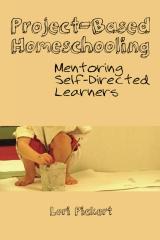
“The book spells out the different steps in implementing student-directed projects, and every chapter has an inspiring list of specific ideas/formats. My only complaint is I want more — I can’t wait to read what Pickert publishes next.”
“[A] must read for all parents and educators who are interested in raising/encouraging children to take charge of their education and make learning a lifestyle and not just a chore. This book is filled with practical advice…”
“There is so much practical, useful information in this book. … Pickert gives us the tools to be great mentors to our kids.”
“PBH actually assisted me in focusing on my own unique style and listening more closely to my own creative voice (as well as that of my children, and being less seduced by everything new and shiny when things lagged in our learning), not just as a parent, but as an individual. The positive impact that this focus has had in my personal and family life is profound.”
“I’ve noticed big changes in my child’s play since I began doing the things suggested, and I am utilizing it for my own projects!”
“In addition to teaching how to do project-based homeschooling it’s like a manual on how to live.”
“Do yourself a favor and read this book with a highlighter and pencil in hand.”
“PBH is hands down my favorite book on homeschooling.”
“Although the title says ‘Project-Based Homeschooling,’ it is really something that any parent could incorporate into their lives, homeschooling or regular schooling.”
“Brilliantly written book, easy to read, easy to follow, well organised, stuffed full of easy to follow and idea-provoking tips for enjoying learning and supporting children of all ages. ... As a librarian and advocate of life long learning, I can’t tell you what a joy this book is to read — affirming, inspiring and practical.”
“Her writing style is really accessible, witty and flows beautifully; she paints a picture of a world you can’t help but want to be a part of. This isn’t a vague philosophy, this is a how-to book that empowers parents to empower their children.”
“For those new to homeschooling and even those such as myself, who have been homeschooling for years, this book will be the one you have on hand at all times. Easy to read, intelligent, heartfelt, inspiring and honest!”
“Wonderful resource! This will help every parent to keep their children’s love of learning alive. Project Based Homeschooling will be a favourite for years to come in our home.”
“It has been an inspiration to our homeschool and to our daily life.”
.
“I can't recommend it highly enough.”
.
“[H]er new book … synthesizes so much wisdom about homeschooling from a project-based perspective.”
“[O]verflowing with ideas for any parent who’d like to encourage more self-directed learning in their kids.”
“Do yourself a favor and read this book with a highlighter and pencil in hand.”
.
.
.
“Anyone who considers themselves the ultimate guardian of their children’s education … will find ideas to think about and act upon.”
“[A] rare book that both inspired me to make changes in the way I homeschool and gave me the practical means to make them.”
“[T]his isn't just a homeschooling book. It is a guide to parenting.”
“What Pickert has done with her book is explain in an easy-to-read and practical manner what parents can do at home to ensure that children will take charge of their own education and gain essential skills. If that sounds far-fetched, I suggest you read the book.”
“There are only a handful of books that I can honestly say have changed my life. This … is one of those books.”
DISCLOSURE STUFF
I do not do any sponsored posts nor do I have any ads on the site.
I do not offer consulting services, but I would be happy to help you for free if you want to e-mail me or join the forum!
I am an Amazon Associate and I have linked a lot of references on the site to Amazon; if you buy anything there (anything at all, not just the linked item) I get a referral fee.
Or you can just enter Amazon through this MAGIC PORTAL and I will receive a tiny kickback if you buy anything at all!
Thank you for supporting PBH!
3 comments
Wow. Very moving.
I have two questions for you, Lori, though maybe they belong in the forum area??
1. How do you deal with "unfinished" projects? I put it in quotes because I am okay with walking away from things when their interests turn elsewhere, but I'm frustrated with materials being half-used...or started and then left. Maybe I just need to work on being less results oriented, but I really don't think that's what's going on. I love how you stress that kids use every bit of the paper---I wish I had done that from the beginning. My son LOVES bare books, and I try to steer him to homemade paper books until he is ready to commit to finishing a book but we have several started books that have only a few pages with anything on them.
Thoughts?
2. Is there any topic/skill that you were/are insistent on your children learning or is it all child-led? For example, you must have done some of the leading on their basic math, I assume, or am I wrong and they just learn it if and when they decide to?
Trying to feel my way here. Thanks for any feedback.
hi deirdre! :^D
this *would* be a good topic for the forum .. maybe i can answer you here and then we can move it over there to keep discussing?
re: unfinished projects .. i think i actually blogged about this before .. here it is!
http://www.whiteoakschool.com/camp-creek-blog/2008/1/10/in-the-studio-works-in-progress.html
now that is more about works in progress, but does touch on abandoned pieces of work. ;^)
one way to encourage children to go back to a piece of work to finish it is to simply remind them (nicely) -- and stay on top of their requests (say, they need you to set up for them to paint it, or they need more wood glue...). always ask to see what they've done, ask them about it, have them tell you their plans. encourage them to show it to others -- family members, friends. this keeps them invested in what they're doing. then in the morning (or at the beginning of project time .. depending on how the rest of your hs'ing or unschooling looks) you can say "you said you wanted to work on X today..." or "i have that paint you asked for..."
sometimes all it takes is a question or a reminder to get them excited about working on something again.
if they really are just done (even if it's not done), then if it's a construction i take it apart and put still-usable pieces back into circulation. if it's paper, i might cut it up for collage work. we upcycle as much as possible.
if he is using spiral-bound sketchbooks as bare books, then i would tear the pages out and have him bind them separately (like a homemade book) -- then keep the sketchbook to try again. it's best to involve them in this decision-making process, of course. ;^) it's amazing how fast something goes from "eh" to "I LOVE THIS MORE THAN ANYTHING IN THE UNIVERSE" as it hovers over the recycle bin.
okay, i will now move this conversation to the project-based learning forum and we can keep talking there!
re: my own learning style, i'm on the unschooling end of the spectrum but we teach math separately. my husband is an engineer, so math fluency is nonnegotiable. ;^)
in my private school, we had a reggio-inspired, project-based curriculum and whatever state learning standards weren't covered by the project were taught separately.
Post new comment