Open thread Saturday

I hope everyone enjoys their weekend. Even though we’re opening it late this morning, we are still having open thread. Forgive me — it’s been quite a week and now I’m mildly ill. Perfect time to get a mug of tea and curl up under the afghan with a book and a warm laptop.
Bring it on: questions, comments, observations, suggestions, tips, hints, anything you’ve got.
Hope your weekend is wonderful!





User login






Most Recent Entries
read the blog archive
get our free weekly newsletter
Book
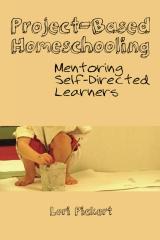
“The book spells out the different steps in implementing student-directed projects, and every chapter has an inspiring list of specific ideas/formats. My only complaint is I want more — I can’t wait to read what Pickert publishes next.”
“[A] must read for all parents and educators who are interested in raising/encouraging children to take charge of their education and make learning a lifestyle and not just a chore. This book is filled with practical advice…”
“There is so much practical, useful information in this book. … Pickert gives us the tools to be great mentors to our kids.”
“PBH actually assisted me in focusing on my own unique style and listening more closely to my own creative voice (as well as that of my children, and being less seduced by everything new and shiny when things lagged in our learning), not just as a parent, but as an individual. The positive impact that this focus has had in my personal and family life is profound.”
“I’ve noticed big changes in my child’s play since I began doing the things suggested, and I am utilizing it for my own projects!”
“In addition to teaching how to do project-based homeschooling it’s like a manual on how to live.”
“Do yourself a favor and read this book with a highlighter and pencil in hand.”
“PBH is hands down my favorite book on homeschooling.”
“Although the title says ‘Project-Based Homeschooling,’ it is really something that any parent could incorporate into their lives, homeschooling or regular schooling.”
“Brilliantly written book, easy to read, easy to follow, well organised, stuffed full of easy to follow and idea-provoking tips for enjoying learning and supporting children of all ages. ... As a librarian and advocate of life long learning, I can’t tell you what a joy this book is to read — affirming, inspiring and practical.”
“Her writing style is really accessible, witty and flows beautifully; she paints a picture of a world you can’t help but want to be a part of. This isn’t a vague philosophy, this is a how-to book that empowers parents to empower their children.”
“For those new to homeschooling and even those such as myself, who have been homeschooling for years, this book will be the one you have on hand at all times. Easy to read, intelligent, heartfelt, inspiring and honest!”
“Wonderful resource! This will help every parent to keep their children’s love of learning alive. Project Based Homeschooling will be a favourite for years to come in our home.”
“It has been an inspiration to our homeschool and to our daily life.”
.
“I can't recommend it highly enough.”
.
“[H]er new book … synthesizes so much wisdom about homeschooling from a project-based perspective.”
“[O]verflowing with ideas for any parent who’d like to encourage more self-directed learning in their kids.”
“Do yourself a favor and read this book with a highlighter and pencil in hand.”
.
.
.
“Anyone who considers themselves the ultimate guardian of their children’s education … will find ideas to think about and act upon.”
“[A] rare book that both inspired me to make changes in the way I homeschool and gave me the practical means to make them.”
“[T]his isn't just a homeschooling book. It is a guide to parenting.”
“What Pickert has done with her book is explain in an easy-to-read and practical manner what parents can do at home to ensure that children will take charge of their own education and gain essential skills. If that sounds far-fetched, I suggest you read the book.”
“There are only a handful of books that I can honestly say have changed my life. This … is one of those books.”
DISCLOSURE STUFF
I do not do any sponsored posts nor do I have any ads on the site.
I do not offer consulting services, but I would be happy to help you for free if you want to e-mail me or join the forum!
I am an Amazon Associate and I have linked a lot of references on the site to Amazon; if you buy anything there (anything at all, not just the linked item) I get a referral fee.
Or you can just enter Amazon through this MAGIC PORTAL and I will receive a tiny kickback if you buy anything at all!
Thank you for supporting PBH!
23 comments
Please do take good care of yourself, Lori! One of these days I'll join the open thread -- Saturdays are really busy at our house (it's my husband's most critical day at work). Get well soon, but in the meantime, enjoy the extra rest!
I would love to brainstorm a bit for ideas for projects to do with my 2.5-year-old who has zero interest in doing any projects with me. (I am using project as a general term, not specifically referring to homeschooling - though I consider everything we do to be homeschooling.) He likes to draw, he likes to build with Legos, he likes to watch movies. He does not like to follow directions, except when he feels like it, which means it is hard for me to work on my own projects since I can't just give him a task (he chooses his own, which is usually "turn the wheel on the sewing machine" or something equally interfering). It sounds like I am complaining, and I swear I'm not! I'm just trying to lay out the challenges. I want to be able to work with him, whether on household stuff or his stuff or something new we haven't tried yet. One place we've had success has been cooking: if I am prepping food, I can set him up with his play food - he has a box of fruit. veg, etc., that is held together with Velcro so he can chop it up while I chop. Any ideas?
hi, lynn! thank you for your good thoughts. :^) i understand about saturdays — and weekends in general. feel free to start a thread in the forum any time!
hi annika :^)
you’re going to hate me, because i know you’ve been rearranging a lot and working on your space issues, but first i would recommend giving him his own space to work, if it at possible — something that doesn’t need to be taken down or repurposed. and you know it needs to be in the main living area because he’s probably not going to want to go off and work by himself. sorry! :^D)
as usual, i would recommend giving him the adjacent wall as display space. try not to immediately fill it (either the horizontal or the vertical space), but put enough material there to get the ball rolling and leave enough room for it to develop into something more specific.
then ..
in order to discover his interests, you are going to need to come to a full stop. as long as you are doing something around him, that is going to command his attention. initially you’ll be getting a lot less done, but if it works, later you can get more done, so maybe it will balance out? ;^) we can hope.
come to a dead stop with him in a somewhat limited environment. (it won’t work if you provide activities or something special — try to keep things neutral.) then watch him play and document what he does, says, chooses, talks about, etc. this is the raw data you will ponder.
you can go to the library and let him choose his own books on whatever he wishes; you can even go shopping in your own books and let him choose freely.
instead of making suggestions, be quiet and leave the suggesting/asking up to him. basically, you’re in observation mode — you’re the anthropologist, he is your tiny native subject.
give it at least a week. (and i’m not saying that you have to do nothing for a week — just observe him for an amount of time every day for a week. maybe an hour? a half hour is probably not long enough. he might just try to wait you out to see what’s coming next.) then look through your notes and see if anything jumps out at you.
if you can uncover something that he is interested in (and not just a passing fancy, but something that actually pulls his attention) — penguins? clouds? fiber arts? — you can then have a place to begin.
what do you think?
Well, the good news is that he has his own space. Not much display space at the moment but I am still working on the walls. You can see it here: http://www.flickr.com/photos/noirbettie/3042126145/ (I'm going to move around some of the books so his stuff is right there).
An additional challenge that I probably should have mentioned is that his language is a bit... well, I don't think it's delayed but it's not really English either. So I have to do a lot of guessing to figure out his interests. Which I don't mind, but like I said - challenge.
And honestly, I am worried that he will just want to watch something. I've been limiting screen time a bit but I don't want to totally dictate what he does with his time. And he pretty much wants to watch Kung Fu Panda (or whatever he's into that day) eight thousand times. I'm thinking I just turn off the power strip and see what he goes for when he realizes a movie isn't an option. (I haven't had to do this yet but it seems like a good idea if he gets really insistent.) Or maybe I should let him put something on, since he usually gets bored and goes off to do something else. I think he likes the IDEA of watching a movie more than actually doing it. If I am observing him, seeing what he goes off to do when the movie gets boring might be a good thing.
yay for space! :^D)
my older son didn’t talk till he was 3 so i know from where you speak. but interests can be revealed from things other than conversation, e.g.,
• toys he chooses most
• dramatic play (situations he’s acting out, etc.)
• books he chooses most
• tv programs that particularly captivate his interest
etc.
when he watches tv, does he just sit and watch or does he play at the same time?
is there some particular scene or thing inside kung fu panda that he’s particularly riveted to?
your description of his watching habits is interesting; i’m wondering if he immediately walks away from it if there’s something better to do .. like help you sew. ;^)
instead of thinking “i will observe you from 9:00 to 10:00 this morning”, try to make some blank spaces (after he’s bored with tv, say) and pay attention to those. it’s easier to let him fall into an empty period of time naturally than try to force it. if you withhold starting something new/offering a new activity/etc., you can see what he does at loose ends.
Just wanted to drop in and say this website is great and that the posts really get me thinking.
Hi there.
Hope you're all better soon. I must say though that you make being sick sound like a nice way to spend a day.
I'm finding that your sciencey, historical, and literature/languagey stuff will pretty much take care of itself, because all of those are preferred areas for my son. The mental gymnastics part of math, too, will come pretty naturally. There are a couple of areas where I think some more formal instruction would be useful, traditional math stuff and ??writing . Any thoughts on ways to go at these that won't be a total dud?
I'd like to do a blog post about different homeschooling methods. Obviously I will talk about your project based approach and direct people here to read. What I'd like to know though is whether you can point me to other blogs, or websites, that give lots of information on other homeschooling approaches. I can go and read around the web and search these things out myself, but I thought I'd ask in case you already have this information.
I'm particularly interested in the following:: Montessori homeschooling; Sonlight/literacy based; Charlotte Mason; Classical Homeschooling and Thomas Jefferson; Rudolph Steiner.
Please do make other suggestions if you have them.
Thanks, Alison
hi, cordelia. :^)
re: math, we teach it separately as well as incorporating it meaningfully whenever possible. there are a lot of different math programs that people use, and others may want to pop up & make recommendations. we don’t use a curriculum, so i’m afraid i can’t recommend anything there.
as to writing, i’ve never had trouble incorporating writing with project work, from age 2 up. although “writing”, i suppose, is rather vague — what specifically are you thinking about?
hi, alison. while i’ve researched other homeschooling methods, i can only claim to be especially knowledgable about project- and inquiry-based learning, Reggio-inspired curricula, and authentic art.
once again, we can throw it out to the crowd — can anyone recommend good websites or blogs about other methods of homeschooling?
I did not end up using a math curriculum when my kids were little: while they were learning basic math facts and before we reached pre-Algebra level. I tried both Math-U-See and Singapore Math and neither seemed to work for us. Instead we used a variety of materials and activities. My favorites would have to be card games, books such as 1001 Pirate Things to Spot (teaches counting to ten and early subtraction skills), baking, learning wrap-ups, and flashcards, which can be fun when you know how to make a game out of using them. We also had some fun computer games that worked well upto the level of decimals and fractions. My kids had been in Montessori school early on so they already knew the elementary math concepts.
I'd mostly suggest finding something that suits the learning style of your child. I'm not sure how you do that - I'm sure Lori has better suggestions on that than I do. One of my kids loves variety and the other likes everything to be plain and done the same way each time, which is another factor to consider. Now one kid uses Teaching Textbooks - simple explanations and no unnecessary stuff. The other enjoys a math textbook we got from the UK which has a lot of variety in how the problems are presented, kind of like mini challenges, rather than having repetition.
When I needed them to work on math facts we ended up using a thick book of timed math challenges. I got it from Walmart and we just tore out the pages and used one for each kid each day. One kid liked to race the stopwatch and the other hated that but liked the very simple format, so it worked for both. I didn't have them do that though until they were ready to get through a page of problems in one sitting without having to take a mental break part-way through.
annika,
when my girls were that age, they loved playing at their sensory table at preschool, so we made one at home - with a plastic tub and various spoons and scoops. one week we'd fill it full of split peas. i'd swap it out the next with rice, then the next with sea shells (we lived at the beach, so they were easy to come by).
now, both of my girls love to help me cook in the kitchen, but when they were younger (they are now 4 and 6), they would often cook beside me with pans and spatulas and measuring cups and water. i would set down a towel, put the dishes with a little water in them on a plastic step stool, and i'd cook dinner, while they cooked with the water. now that i'm thinking about it, i should offer them that choice agan - they may still get something out of it!
your little one may be a bit young, but when my girls hit 3 and 5, I got stockmar modeling beeswax. we all spend long cold NW winter afternoons at the dining room table together modeling people, animals, flowers, etc.
hope that helps!
lori and allison,
i do like the concept of narration in charlotte mason method. i enjoy how the girls can take a story we've just read, and they can retell to me the parts of it that were meaningful to them . i like hearing their perspective, their voice, and often one will remember something the other did not, or one will get an impression of the story that differed from her sister's, and it will spark a conversation.
as for me, i'm interested in what to do when your child gets in a rut with an art project. my oldest enjoys watercoloring - endlessly. she could do it for hours a day. she usually sits at the kitchen table and paints things she sees in the backyard. i have offered her still life compositions, and art books, etc. i've also tried asking her to write about her paintings or tell a story based on what she paints. she is resistent, and she is clearly enjoying what she does, and i don't know how to expand her horizons and don't want to push her too much.
i'd love any thoughts folks may offer.
I know I'm a bit late but I wanted to share a revelation I had yesterday. My 2.5 yr old daughter has been poorly with an ear infection for the last week and since then she started rejecting her favourite books because each of them (and we're talking a lot) has something upsetting in them 'there's too many bears' 'I don't like the page with the takin' 'the lamb falls down the hill' and so on. Prior to reading The Hundred Languages and the posts on this site I probably wouldn't have paid much notice but recently I have been listening carefully to what she says and does and I have given a lot of thought to this book trouble. The only books she'll let us read (and normally she wants book after book after book) are these really gentle ones about baby animals that don't have stories by John Butler. After thinking and thinking I now believe that we were buying books suitable for her cognitive abilities and completely ignoring her emotional needs and level of development. This in turn has made me pay even more attention to what she says and what she shows an interest in. I'm trying to see the whole child. I've been using documentation in our homeschool (with another friend) but now I'm going to use it more in the rest of our time too. I keep a diary of the days events for the children to look back on when they're older and maybe that's something that I could turn into a more fuller form of documentation than they can even access now. What do you think?
thank you, Teri!
alison, such great points about taking each child’s preferences and temperament into consideration. we don’t use any set math curriculum either; we cobble together various books and activities.
thank you for your input!
angela, ooh - beeswax. :^)
mm, re: getting in a rut .. on the one hand, you want to honor the fact that your child is really doing work that is important to them and obviously has a long attention span to dedicate to working in this particular way. on the other hand, it is always the goal to encourage them to expand their work.
(i would throw this to my studio teacher as well, but i know she’s up in chicago for the holiday! maybe she can come back and give some additional suggestions later. ;^)
so, let’s see .. pondering extensions ..
-- vary the watercolor materials, e.g., give watercolor paper cut into different sizes, colored watercolor paper, a bound watercolor sketchbook, additional paints (there is a wide variety of colors between different sets -- you could also give her a few tubes of liquid watercolor and let her mix her own colors -- a plastic palette would go along with that idea), brushes of varying sizes and shapes and materials
-- vary the art-making materials, e.g., offer acrylics & canvas
-- offer inspirational pieces, e.g., art books (i like to buy mine at junk shops and library sales), art prints, etc. you can use library books for this, but inexpensive used books are preferable as if they are used in the studio they will no doubt get paint on them!
-- vary the surroundings -- if she likes to paint things she sees in the backyard, you could take some dedicated walks/hikes/outings to paint en plein air
-- ask her specifically what you can get for her to help her with her work
-- paint with her, varying your own technique (e.g., sketching first)
it is a careful line to walk between making suggestions and asking her to do something specific, between setting out provocations (say, a still life) and implying or requiring that she paint that still life.
i would encourage you to honor the work she is doing by documenting it -- say, photographing her working, by displaying her work, by giving her a dedicated work space to keep her supplies and inspirational images, by asking her what she needs to continue.
if she is in a rut because she feels very confident with what she is doing, then pressuring her to do something else probably won’t have a good effect. if she is in a rut because she hasn’t considered ways to extend her work, offering things like those listed above might encourage her to do so. but it’s worth considering that maybe she isn’t in a rut -- maybe she is still very interested in what she’s doing. e.g., “oh, van gogh - sunflowers *again*?!” ;^)
ali, your story really moved me. i agree that after working this way with children, i’m much more likely to pay close attention to the things they say and how they behave believing that there is a *reason* behind it .. not just brushing it aside. and then actually honoring the fact that your daughter feels this way rather than pushing her to accept her old books .. really lovely. :^)
i love your idea of documenting your ordinary time together more .. really, this way of thinking about children and their capabilities and their rights does, in the end, affect every part of our lives. wonderful that you want to apply that careful attention to your everyday life.
also, re: something they can access now — yes! — documentation can become a back-and-forth conversation of sorts that encourages them to think about their own making, doing, interests, learning, etc., and extend those thoughts and that work.
thank you so much for sharing this!
Hi Lori,
You left a comment on my site recently about my boy's legos.
They now have their own blog for sharing their lego creations...
www.thelegomaker.blogspot.com
Hope your boys enjoy it!
i will point them to it! they are lego fiends. :^)
Post new comment