Ten tips for reluctant readers
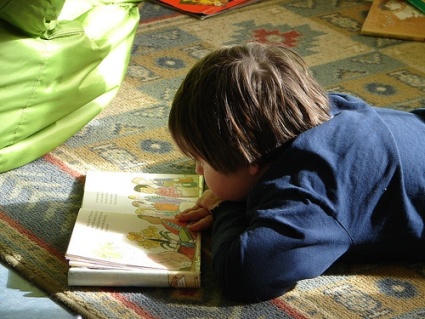
Enjoyed this: 10 Tips for the Parent of Ricky, the Reluctant Reader. From The Well-Read Child.
Hat tip: Seven Impossible Things Before Breakfast.





User login


Most Recent Entries
read the blog archive
get our free weekly newsletter
Book
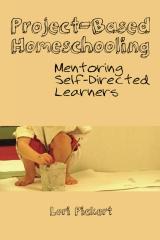
“The book spells out the different steps in implementing student-directed projects, and every chapter has an inspiring list of specific ideas/formats. My only complaint is I want more — I can’t wait to read what Pickert publishes next.”
“[A] must read for all parents and educators who are interested in raising/encouraging children to take charge of their education and make learning a lifestyle and not just a chore. This book is filled with practical advice…”
“There is so much practical, useful information in this book. … Pickert gives us the tools to be great mentors to our kids.”
“PBH actually assisted me in focusing on my own unique style and listening more closely to my own creative voice (as well as that of my children, and being less seduced by everything new and shiny when things lagged in our learning), not just as a parent, but as an individual. The positive impact that this focus has had in my personal and family life is profound.”
“I’ve noticed big changes in my child’s play since I began doing the things suggested, and I am utilizing it for my own projects!”
“In addition to teaching how to do project-based homeschooling it’s like a manual on how to live.”
“Do yourself a favor and read this book with a highlighter and pencil in hand.”
“PBH is hands down my favorite book on homeschooling.”
“Although the title says ‘Project-Based Homeschooling,’ it is really something that any parent could incorporate into their lives, homeschooling or regular schooling.”
“Brilliantly written book, easy to read, easy to follow, well organised, stuffed full of easy to follow and idea-provoking tips for enjoying learning and supporting children of all ages. ... As a librarian and advocate of life long learning, I can’t tell you what a joy this book is to read — affirming, inspiring and practical.”
“Her writing style is really accessible, witty and flows beautifully; she paints a picture of a world you can’t help but want to be a part of. This isn’t a vague philosophy, this is a how-to book that empowers parents to empower their children.”
“For those new to homeschooling and even those such as myself, who have been homeschooling for years, this book will be the one you have on hand at all times. Easy to read, intelligent, heartfelt, inspiring and honest!”
“Wonderful resource! This will help every parent to keep their children’s love of learning alive. Project Based Homeschooling will be a favourite for years to come in our home.”
“It has been an inspiration to our homeschool and to our daily life.”
.
“I can't recommend it highly enough.”
.
“[H]er new book … synthesizes so much wisdom about homeschooling from a project-based perspective.”
“[O]verflowing with ideas for any parent who’d like to encourage more self-directed learning in their kids.”
“Do yourself a favor and read this book with a highlighter and pencil in hand.”
.
.
.
“Anyone who considers themselves the ultimate guardian of their children’s education … will find ideas to think about and act upon.”
“[A] rare book that both inspired me to make changes in the way I homeschool and gave me the practical means to make them.”
“[T]his isn't just a homeschooling book. It is a guide to parenting.”
“What Pickert has done with her book is explain in an easy-to-read and practical manner what parents can do at home to ensure that children will take charge of their own education and gain essential skills. If that sounds far-fetched, I suggest you read the book.”
“There are only a handful of books that I can honestly say have changed my life. This … is one of those books.”
DISCLOSURE STUFF
I do not do any sponsored posts nor do I have any ads on the site.
I do not offer consulting services, but I would be happy to help you for free if you want to e-mail me or join the forum!
I am an Amazon Associate and I have linked a lot of references on the site to Amazon; if you buy anything there (anything at all, not just the linked item) I get a referral fee.
Or you can just enter Amazon through this MAGIC PORTAL and I will receive a tiny kickback if you buy anything at all!
Thank you for supporting PBH!
20 comments
lolol
love that!
dude, calvin and hobbes is the gateway to literacy in this house.
word.
This was wonderful to read. Thanks for the link!
love this link! especially because I have an extremely reluctant reader. And of course I feel all this "watchful eyes of those homeschooling nay-sayers" breathing down my neck because my reluctant reader isn't in chapter books yet.
I think mostly, she just wants to do it on her own time. Like always. I've gone hands-off in my approach the past few weeks. Sometimes we all need a little vacation.
xox.
e, srsly -- what better motivation to learn to read?
i’m glad you liked it, too, christina!
mol, i especially liked the point that a reluctant reader isn’t necessarily a reluctant listener — and isn’t the more important point to love books and reading? what use is it being able to decode phonics if it taints your love of books?
I also liked this. My son is very resistant to reading age-level books. It seems his imagination and idea of a good read has always been at a higher-level than his literacy. So, the books he enjoys are not books that he can himself read. But, I've found that he really enjoys reading recipes while we cook, instructions for putting things together, text on video games, the cards in games like operation or monopoly, etc. Reading that has a result in his life... a purpose other than simply reading. His pleasure is in the fruits of his reading labor, not in the reading itself. It may change over time, or it may never change. But, it just goes to show that there are ways that anyone will learn and love to read.. and sometimes, it has nothing to do with a book.
candy, in my experience, children are drawn naturally toward material that is both far below and far above their current reading ability — what i find flabbergasting is that parents and teachers will censure them for *both*! as in, “that book is too easy for you; choose something else” *and* “that book is too hard for you; choose something else”. gahhh!!! if anything, *that* is the attitude that i find most annoying when it comes to children and learning .. when adults make arbitrary decisions about what they can and can’t do, what they should and shouldn’t be interested in.
it seems obvious to me that reading material that is “beneath their ability” can reinforce their reading skills and *obviously* it builds their love of learning, since they are so often choosing a particular favorite book or type of book.
as to reading material far above, i caught my sons reading shakespeare this summer .. !? i asked my 11yo, “do you understand that?” and he said “it’s really hard to understand .. but i’m going to keep working at it.” now, i read not long ago about how reading lists at high schools and colleges have become dumbed down and as a result, *adults* are unwilling to read “challenging works”. when i heard my 11yo urging my 8yo to try reading shakespeare, i figured i was doing *something* right. ;^)
as to your son’s pleasure being in the actual *reading* part of reading — so, so true! and yet the schools often stomp this part out. they take away the pure pleasure that draws us to reading and what are we left with? nothing compelling.
Cookbooks are the only things that seem to inspire my daughter. Whatever works.
sally, yes, and i know a lot of grown-ups who like to go to bed with a good cookbook, too. ;^)
Lori,
Thanks so much for posting this link and sparking a wonderful conversation about growing readers!
Calvin and Hobbes was the first thing my reluctant reader actually wanted to read. He devoured those books night after night. Now the voracious reader has stolen them from his room so she can read them too. He's not happy.
As someone who loves to read, I've had such a hard time getting where my son is coming from in this area. He has dyslexia, so he has always seen reading as work. It took discovering C&H and graphic novels before he found out that reading can be fun too.
thank you, jill -- i love the post! :^)
sarah, c&h has got to be the silver bullet for all reluctant readers .. plus, it’s a great vocabulary builder! schools need to invest in c&h books. ;^)
No reluctant readers in our house, only reluctant times for reading (e.g., when all day long dolls need to be "organidized" into sisters on one sofa and brothers on the other. Don't know if those tips will stand up to that urge...
lol, kat. it sounds like the segregated dolls need to be read a story. ;^)
Lori, this was a great website! Unfortunately I did everything on the list and more to encourage my reluctant reader. No luck. I have an idea that some boys might need to see dads reading even more than moms. I love the idea that children might need an opportunity to get a little bored to really learn the joy of reading. There's also the idea that boredom leads to creativity too (I'm sure you've heard that before and probably said it yourself!).
nancy, you’re right -- i often tout the benefits of boredom! :^D)
children need to learn to handle themselves without constant input, and they need to develop inner resources -- creativity and imagination, the ability to entertain themselves.
it’s true that often the first step toward getting your children to participate in some activity is making a space for that activity -- a space in their day and a space in your home.
a good point about seeing dads reading, too!
although i’m not a book-on-tape person, many people have told me they wooed a reluctant reader that way. we have always read aloud every day, and when the boys got older, we read a chapter of our fiction book, a chapter of a nonfiction book (something science related -- my older son loved bill bryson’s “a short history of nearly everything”), and three poems. :^)
what are your son’s interests? i’m wondering whether that could be the starting point ..
We do books on tape at our house and have ever since my daughter was about 4. My husband and I sometimes "blame" my daughter's current lack of interest in learning how to read on the fact that her desire for complicated material is so well satisfied by our reading so much to her and by her endless access to books on tape. She's still just 7, so not a "late" reader, but we've been surprised by her total lack of interest in learning to do it herself.
christie, what are her interests?
We're kind of still working on being able to answer that question. For reading material it is pretty much anything at all. For books on tape we stick mostly to classics because I think there is plenty of crummy contemporary writing (funny enough, if she wants to read Junie B Jones, that's fine by me, but I'd rather she didn't listen to that kind of thing).
Outside of maxing out my ability to read aloud, what really puts a sparkle in her eye is mixing things, but only if Mom stays far, far away. She hates directions and suggestions. One of the reasons I'm excited for her start reading is so that she can flip through science project books or cooking books on her own and do things that strike her and it can all be a big secret from me. But at this point, she finds those books limiting, and the ideas in them might as well come from me.
As for reading, she can only read books with about 7-8 words to a page and are about 5 pages long. Of course those books tend to be duller than dirt. Her level seems to be below what may easy reader publishers call level 1. Some of those level 1 readers are ridiculously difficult! We have found that that the Brand New Readers series books end with a little amusing twist that make the whole process palatable, but for the most part she has absolutely no interest in anything that she could read.
I am working on breathing deep and trying to journal and record keep. Baby steps here.
keep on with the baby steps! but i was looking for more interests like the mixing .. interests that might have writing or reading extensions that you could just leave for her to look at.
remember that even though her “reading level” might be beginning level, that doesn’t mean she can’t poke through higher-level books and find things she can read or wants read to her. there has to be motivation there, and if the level-1 readers aren’t providing it...
if you can come up with more interests, i will brainstorm with you!
Post new comment