What do students want?

Most teachers have a fairly good idea of what they want from students. They want students to become people who can think intelligently and creatively, communicate clearly and expressively, critique freely, work for the common good, and link consciousness to conduct (Ayers, 1991).
But what do students want from teachers? — “Instructional Design for Inquiry”





User login



Most Recent Entries
read the blog archive
get our free weekly newsletter
Book
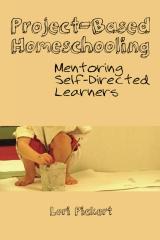
“The book spells out the different steps in implementing student-directed projects, and every chapter has an inspiring list of specific ideas/formats. My only complaint is I want more — I can’t wait to read what Pickert publishes next.”
“[A] must read for all parents and educators who are interested in raising/encouraging children to take charge of their education and make learning a lifestyle and not just a chore. This book is filled with practical advice…”
“There is so much practical, useful information in this book. … Pickert gives us the tools to be great mentors to our kids.”
“PBH actually assisted me in focusing on my own unique style and listening more closely to my own creative voice (as well as that of my children, and being less seduced by everything new and shiny when things lagged in our learning), not just as a parent, but as an individual. The positive impact that this focus has had in my personal and family life is profound.”
“I’ve noticed big changes in my child’s play since I began doing the things suggested, and I am utilizing it for my own projects!”
“In addition to teaching how to do project-based homeschooling it’s like a manual on how to live.”
“Do yourself a favor and read this book with a highlighter and pencil in hand.”
“PBH is hands down my favorite book on homeschooling.”
“Although the title says ‘Project-Based Homeschooling,’ it is really something that any parent could incorporate into their lives, homeschooling or regular schooling.”
“Brilliantly written book, easy to read, easy to follow, well organised, stuffed full of easy to follow and idea-provoking tips for enjoying learning and supporting children of all ages. ... As a librarian and advocate of life long learning, I can’t tell you what a joy this book is to read — affirming, inspiring and practical.”
“Her writing style is really accessible, witty and flows beautifully; she paints a picture of a world you can’t help but want to be a part of. This isn’t a vague philosophy, this is a how-to book that empowers parents to empower their children.”
“For those new to homeschooling and even those such as myself, who have been homeschooling for years, this book will be the one you have on hand at all times. Easy to read, intelligent, heartfelt, inspiring and honest!”
“Wonderful resource! This will help every parent to keep their children’s love of learning alive. Project Based Homeschooling will be a favourite for years to come in our home.”
“It has been an inspiration to our homeschool and to our daily life.”
.
“I can't recommend it highly enough.”
.
“[H]er new book … synthesizes so much wisdom about homeschooling from a project-based perspective.”
“[O]verflowing with ideas for any parent who’d like to encourage more self-directed learning in their kids.”
“Do yourself a favor and read this book with a highlighter and pencil in hand.”
.
.
.
“Anyone who considers themselves the ultimate guardian of their children’s education … will find ideas to think about and act upon.”
“[A] rare book that both inspired me to make changes in the way I homeschool and gave me the practical means to make them.”
“[T]his isn't just a homeschooling book. It is a guide to parenting.”
“What Pickert has done with her book is explain in an easy-to-read and practical manner what parents can do at home to ensure that children will take charge of their own education and gain essential skills. If that sounds far-fetched, I suggest you read the book.”
“There are only a handful of books that I can honestly say have changed my life. This … is one of those books.”
DISCLOSURE STUFF
I do not do any sponsored posts nor do I have any ads on the site.
I do not offer consulting services, but I would be happy to help you for free if you want to e-mail me or join the forum!
I am an Amazon Associate and I have linked a lot of references on the site to Amazon; if you buy anything there (anything at all, not just the linked item) I get a referral fee.
Or you can just enter Amazon through this MAGIC PORTAL and I will receive a tiny kickback if you buy anything at all!
Thank you for supporting PBH!
11 comments
One of my children just spoke with me about this last week. He would like student's opinions to be respected, for their voices to count.
how old is your son, stephanie?
11, in the 6th grade. The comment welled up from some frustration he is having with one of his teachers - he finds her a bit overbearing.
many teachers would be taken aback asked this question. whether teaching in a classroom or leading your own children at home, many adults automatically take an authoritarian role. turning things around and saying, what do you think *they* want — well, it’s a good thing to think about.
I've been thinking about this very thing for some time - I am not sure they know what they want, really... just like it is difficult for me to articulate what I want at times...
But then, it also seems to me that they want things that are not good for them as well. Things that are merely expedient, or fun, or tasty-sweet.
So, my solution has recently been to give them a portion of control (not all of it, but not NONE of it either) over their school day, and lots of free time in the morning and at lunch for legos or cardboard house making, or whatever happens to be the game d'jour. It hasn't eliminated all of the frustration, but at least they know they are being listened to and their feelings and preferences consulted.
Also, I am trying to listen intentionally to the things they are saying throughout the day in their actions and choices, and collect them in MY project notebook (THEY are my project, right?) I'll cut it short here, but I go into more detail on my blog.
http://web.me.com/eganastapdance/Peanut_Butter_Toast/Home_Education/Entries/2008/10/18_Listening_to_Them.html
Also, following Lori's excellence advice, I have given over the afternoons to their inquiry based learning "projects," while retaining their first morning efforts for my teacher-directed "nuts and bolts" lessons and activities. It has been a good balance for us. Occasionally I reassess to see if I can improve, and I try to listen to their ongoing ideas and expressions.
One thing my older boy requested was time to work on his Cub Scout awards. So now Friday mornings he and his brother do the "scout stuff" they are interested in. So now they give me 4 mornings of nuts and bolts, and they get Friday morning for being scouts. Works for me. Works for them.
thank you for visiting my blog. i like yours very much, it's very interesting and useful for me as a parent, i will add in my preferite...
megan - i disagree. i think most children in a learning relationship do have an opinion about what they want from their teacher/parent *in that learning relationship*.
also - it sounds like you are equating child-led learning with candy for breakfast?
and - to clarify - my recommendation for someone who is using a traditional school-style curriculum who wants to incorporate project learning is to set aside some part of your day or week for child-directed project work. obviously, if you are unschooling, then this is your entire curriculum -- supporting your child while they teach themselves. if you are an eclectic homeschooler and fall somewhere in the vast middle, you could choose to make project work the main focus of your learning and teach directly any basic skills that weren’t covered. Or, you might simply make time for children to work on a project along with what you were doing before.
Project learning is an approach, not a method. It works with any style of homeschooling or unschooling.
"i think most children in a learning relationship do have an opinion about what they want from their teacher/parent *in that learning relationship*."
I was taking the idea very broadly, and applying it across the board in my ongoing relationship with my students / kids. I was thinking about the variety of ways that I impose my goals and desires on them, and was challenged to think about what THEY might want. It is interesting as both teacher / students AND and mom /children, the learning relationship and the living relationship edges blur and intermingle somewhat with home education.
My analogy to "candy for breakfast" was not meant to cast aspersions on child-led learning. Far from it. I was thinking out loud about how to respond with gentle direction when what the student / child WANTS seems to be more bad than good for that child.
for example:
J has insightful ideas, and makes creative, interesting connections between ideas and subjects that are thrilling to discover. But he dislikes writing - and I have not aggressively pushed him to improve, only praised and encouraged his efforts and attempted to inspire him to want to write his ideas down on paper. But he doesn't want to, and it has been like pulling teeth to get him to do so, so now what we have neglected because of his lack of desire is seriously limiting him in his ability to express his ideas in a way that lasts beyond the conversation of the moment.
Written down (like those wonderful Art History Journal pages showed us) the ideas and the discovery and the process can be captured, relived, and used as a springboard for further investigation. But ideas are lost when they are not preserved. And J's ideas are often lost because he does not WANT to write them down.
So that's the candy in the analogy - choosing what you WANT (not writing) at the expense of the good (writing for reading and communicating later.) The candy is the "want" that has dubious benefit down the road.
I guess I was exploring where I must step in and direct (please write something down about this really cool thing you just learned so we can enjoy it again later, or you can show daddy, etc.) and where I can step back and allow their desires to direct (he asked to type instead - and so that's what we do now.).
I am more and more convinced that inquiry based learning is the best approach for true learning. I am merely trying to determine when I need to put my apron on and serve up some tasty AND nutritious breakfast to lure them away from the candy they want right at that moment.
it seems like you *are* comparing child-led learning with candy for breakfast.
you say: “I am merely trying to determine when I need to put my apron on and serve up some tasty AND nutritious breakfast to lure them away from the candy they want right at that moment.”
the point is to allow your child to direct their own learning. you can’t do that if you insert yourself and start telling them what to do and how to do it. you will kill off their interest and defeat the entire purpose of letting them discover that they can be in charge of their own learning. it’s about giving them the chance to be in charge.
you are attempting to incorporate an inquiry-based project within the limits of a traditional curriculum. you can address any basic skills acquisition within the traditional part of your curriculum. that is not the focus of this type of learning.
there are basic skills, and there is the *application* of basic skills.
there is the ability to read and write, and there is the *desire* to read and write.
the point of allowing children to learn in this way is to allow them the opportunity to *use* their skills for doing something important to *them*. and if they don’t want to write, presumably they will find another way to express themselves. that is the ninety-nine from the hundred languages poem.
This discussion has really made me think...
When we were working on the art history journals- the boys were totally engaged on what they were doing. They were reading about da Vinci's designs for giant catapults and studying his drawings of skeletons. They took notes about what they thought might be important- not what I said was important. They needed notes to create their journal (which also included watercolors, charcoal drawings, scratchboards). More than anything, they were making these journals for themselves- and wanted to teach and show others. It was the engagement in the subject matter that drove their desire to read, study, write, and draw.
Generally, I would choose the artist of study- beginning with da Vinci because I knew that his drawings and mirrored writing etc. would be of interest to the class. Da Vinci was easy- there are so many books and resources. Other artists- I wasn't so sure what would catch the attention- like Picasso's Guernica. Which led them into discussions about the Nazis and war. Or Ansel Adams which led to environmental discussions. All of this happened because they cared about it- and I did my best to fan the flame.
Lori:
Thanks for helping me work these ideas out. I appreciate your insights and your patience with me as I wrangle with new concepts and ideas. It's great to be
both challenged and inspired.
*grin*
Post new comment