The only invitation children need to play is time

I’m seeing posts and pins this week about organizing children’s play around their Halloween costumes. These include suggestions for creating “invitations” for children that match their costumes.
The word “invitation” is being thrown around a lot, as well as the Reggio term “provocation,” and I think it’s worth exploring more deeply.
What is dramatic play? It’s using your imagination and ideas and exploring them through pretending and world-building. It’s building play-acting scenarios about the things that excite you as well as the things you don’t understand. It starts with the child and what fascinates him, what he wonders, what scares or interests or excites him.
I’m sure the people who are doing these very specific and directed “invitations” would quickly say that children can take the play in whatever direction they like, but why build so much of the scenario for them to begin with? If you’re using Halloween costumes as the jumping-off point, isn’t it enough to dress up as doctors or pirates or circus performers (presumably something that interested the child enough to choose the costume) and then do the important child’s work of selecting your own props and building your own scenarios?
Sometimes I think we kill all spontaneity for children because we’re afraid — afraid they won’t have their own ideas, or maybe afraid that their play won’t be significant enough. But that’s a misunderstanding on our part, because children’s play is always significant.
Play is often talked about as if it were a relief from serious learning. But for children play is serious learning. Play is really the work of childhood. — Fred Rogers
Piaget called play the work of children and the language of childhood. Both Piaget and Mr. Rogers knew the score: Play is how children learn. And the more you do, the less your child can do.
In order for a child to understand something, he must construct it himself, he must re-invent it. Every time we teach a child something, we keep him from inventing it himself. — Jean Piaget
When we plan our children’s play, when we step in and initiate their play for them, we are reducing their learning opportunities. Period.
The only invitation your children require is some space, some flexible, generic props (cardboard boxes, small plain table, squares of cloth, wooden blocks…), and most important of all, time.
At educational conferences in the nineties, kindergarten teachers continued to defend play, even as they had to allow more and more paperwork to clutter the tables and walls. Some teachers tried to recapture the certainties of the past by collecting antique block sets and doll-corner cribs, ancient dolls, and little wooden cars and trains, resisting anything that came in a catalogue. But we overlooked the real villain in our midst. It turned out to be not so much the “academics” we were adding but the time we subtracted from the children's fantasy play that would begin to make the difference.
Having not listened carefully enough to their play, we did not realize how much time was needed by children in order to create the scenery and develop the skills for their ever-changing dramas. We removed the element — time — that enabled play to be effective, then blamed the children when their play skills did not meet our expectations.
Although we feared the influence of television, we were cutting down on the one activity that counteracts the mindlessness of cartoons.
We blamed television for making children restless and distracted, then substituted an academic solution that compounded restlessness and fatigue.
The children may have been the only ones capable of making sense of the confusion, and they did so whenever the schedule was cleared so they could play. — Vivian Gussin Paley, A Child’s Work: The Importance of Fantasy Play
We’ve all had that friend who said she’d show us how to use her new yo-yo and then played with it herself for a half an hour while we just sat there wishing we could at least try it once. Don’t be that guy.
All of the ideas on Pinterest for building forts and playing cowboys and knights and astronauts and setting up mud pie kitchens were born in the minds of small children. You aren’t doing your child any favors when you take away the discovery and invention and offer a predigested plate of fun.
Let them do it all. Every single bit of it. Don’t worry — it’s already in there. It’s who they are. It’s what they were born to do. They’ve got this.
For more on this subject, check out: Curriculum of Curiosity





User login





Most Recent Entries
read the blog archive
get our free weekly newsletter
Book
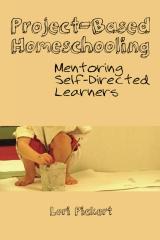
“The book spells out the different steps in implementing student-directed projects, and every chapter has an inspiring list of specific ideas/formats. My only complaint is I want more — I can’t wait to read what Pickert publishes next.”
“[A] must read for all parents and educators who are interested in raising/encouraging children to take charge of their education and make learning a lifestyle and not just a chore. This book is filled with practical advice…”
“There is so much practical, useful information in this book. … Pickert gives us the tools to be great mentors to our kids.”
“PBH actually assisted me in focusing on my own unique style and listening more closely to my own creative voice (as well as that of my children, and being less seduced by everything new and shiny when things lagged in our learning), not just as a parent, but as an individual. The positive impact that this focus has had in my personal and family life is profound.”
“I’ve noticed big changes in my child’s play since I began doing the things suggested, and I am utilizing it for my own projects!”
“In addition to teaching how to do project-based homeschooling it’s like a manual on how to live.”
“Do yourself a favor and read this book with a highlighter and pencil in hand.”
“PBH is hands down my favorite book on homeschooling.”
“Although the title says ‘Project-Based Homeschooling,’ it is really something that any parent could incorporate into their lives, homeschooling or regular schooling.”
“Brilliantly written book, easy to read, easy to follow, well organised, stuffed full of easy to follow and idea-provoking tips for enjoying learning and supporting children of all ages. ... As a librarian and advocate of life long learning, I can’t tell you what a joy this book is to read — affirming, inspiring and practical.”
“Her writing style is really accessible, witty and flows beautifully; she paints a picture of a world you can’t help but want to be a part of. This isn’t a vague philosophy, this is a how-to book that empowers parents to empower their children.”
“For those new to homeschooling and even those such as myself, who have been homeschooling for years, this book will be the one you have on hand at all times. Easy to read, intelligent, heartfelt, inspiring and honest!”
“Wonderful resource! This will help every parent to keep their children’s love of learning alive. Project Based Homeschooling will be a favourite for years to come in our home.”
“It has been an inspiration to our homeschool and to our daily life.”
.
“I can't recommend it highly enough.”
.
“[H]er new book … synthesizes so much wisdom about homeschooling from a project-based perspective.”
“[O]verflowing with ideas for any parent who’d like to encourage more self-directed learning in their kids.”
“Do yourself a favor and read this book with a highlighter and pencil in hand.”
.
.
.
“Anyone who considers themselves the ultimate guardian of their children’s education … will find ideas to think about and act upon.”
“[A] rare book that both inspired me to make changes in the way I homeschool and gave me the practical means to make them.”
“[T]his isn't just a homeschooling book. It is a guide to parenting.”
“What Pickert has done with her book is explain in an easy-to-read and practical manner what parents can do at home to ensure that children will take charge of their own education and gain essential skills. If that sounds far-fetched, I suggest you read the book.”
“There are only a handful of books that I can honestly say have changed my life. This … is one of those books.”
DISCLOSURE STUFF
I do not do any sponsored posts nor do I have any ads on the site.
I do not offer consulting services, but I would be happy to help you for free if you want to e-mail me or join the forum!
I am an Amazon Associate and I have linked a lot of references on the site to Amazon; if you buy anything there (anything at all, not just the linked item) I get a referral fee.
Or you can just enter Amazon through this MAGIC PORTAL and I will receive a tiny kickback if you buy anything at all!
Thank you for supporting PBH!
51 comments
i think that the answer is that it takes a lot less input than parents think to spark an interest, a question, an idea, a plan. parents plan a LOT of activities — (see this post: http://project-based-homeschooling.com/camp-creek-blog/abilities-vs-acti...) — when instead they could do a LOT less and then focus on the child to find those questions/ideas/etc.
definitely you want to “fill their bucket” with great raw materials — materials for making, open-ended toys, experiences, books, etc. — but then watch their play, listen to them talk, see what they build, etc., to help them take one question or interest or idea as a starting point for exploring and doing.
so it’s a balance. :) but it doesn’t take much to get them going!
Pages
Post new comment