How to destroy a child’s love of learning in 15 easy steps
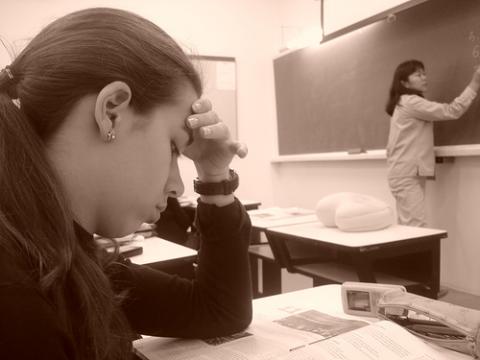
Photo credit: Richard Phillip Rücker, Flicker Creative Commons
1. Make sure he knows learning isn’t about what he wants to do but what he HAS to do. Even if you’re doing “project-based learning,” it’s your ideas that matter. Inspire kids to design, invent, and make an impact by giving them specific tasks YOU thought up and YOU care about!
2. Whenever possible, be patronizing. It’s inspiring to kids. They can dream of the day when they’re in charge and looking down on their own minions. Whatever you do, keep them away from grown-up books, resources, and tools — don’t let them stray from their assigned reading level!
3. If your child has a strong interest, use it as seasoning on required work.
Don’t have kids count regular pencil erasers in the math center — have them count dinosaur erasers! Kids love dinosaurs! Nothing brightens rote work like a reminder of something they would much rather be learning about.
4. Share his excitement to the point where you flood him with your ideas and take over. After all, your ideas are wayyyy better than his — he’s only seven!

A MacGyver project?! We know everything about MacGyver!
5. As early as possible, begin differentiating between “fun” and “work” and make sure he knows learning is “work” — we don’t call it schoolFUN, do we? “Work” isn’t supposed to be fun — if it’s fun, engaging, and/or enjoyable, that means it’s too easy.
6. Do the fun stuff yourself — you deserve it! Choosing books and materials, planning field trips, planning parties — when something fun is involved, that’s a treat for YOU!
7. When something requires decision, choice, weighing options, and/or allocating funds, do that yourself. That’s grown-up stuff.
8. Whenever possible, eliminate choice. The whole process will be much more streamlined if it’s a “tab A” into “slot A” situation. You can’t usher 15 kids through a craft quickly and efficiently if you don’t get that conveyor-belt vibe going.
Bonus: When displaying children’s artwork, scatter them all over the bulletin board turning them this way and that. That really reveals your respect for the effort they put into your cookie-cutter craft.
9. Creativity should be limited to which sticker you want to use to decorate the planned craft. Letting kids have input into the design process will take forever. We don’t have time for that.
10. Chew their meat for them. Prepare things ahead of time. Lay out the materials. Choose the books. Mark the passages. Find great movies to watch. Look up craft ideas on Pinterest. Cut the construction paper into squares and rectangles. Find the expert. Arrange the field trip. Tell them exactly what they need to know.
11. When they do their little bit at the end, shout “BIIIIIIG FINISH!” and give them a gold medal. They’ll treasure it. Nothing says “I honor and appreciate your work” like a certificate printed off the Internet.
Nothing confuses a child like giving them a reward for something they wanted to do — keep them on their toes!
12. Remember to rank everyone who participates and make sure everyone knows who did the assignment “right” and “best.” The most important thing you can learn is how to follow directions — and the second most important is where you rank amongst your competitors. Whether you’re a bluebird or a sparrow, it’s better to find out early!
For optimal comparison, have everyone do the exact same “art” project and hang them up in a grid. Nothing inspires kids to work harder than having the worst construction-paper Abe Lincoln.
13. Praise kids for being docile followers. Punish kids whenever they take initiative or make suggestions. They’re just trying to gum up the works!
Make sure kids learn early what a “good student” is. That way everyone will want to learn, learn, learn.
14. Use stereotypes to show kids what their interests now will get them later in life. Make sure they know that once you choose, that’s it.

If you like science, you too can wear horn-rimmed glasses and work in a nice white lab that’s even more windowless and sterile than your classroom!
15. Stamp out autonomy. Drop the leash and kids will go in directions you cannot predict and plan for. You won’t be able to prepare it all ahead of time if you don’t know what’s going to happen! This is why preplanning is essential. Remember: it’s not about what they want. It’s about how well they do what we want.
BONUS IDEAS
Make sure they know that if they don’t understand the material, that’s THEIR fault.
The point of rigor isn’t to help kids work hard at things they want to do, it’s to force them to buckle down at things they find boring and irrelevant.
PLEASE CONTRIBUTE!
Do you have some ideas of your own? Share them in the comments!
THE ANTIDOTE
Feeling ouchy? This is for you: How to save a child’s love of learning in one easy step
And you might like this as well: Self-directed learning: the neglected subject?





User login




Most Recent Entries
read the blog archive
get our free weekly newsletter
Book
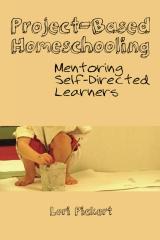
“The book spells out the different steps in implementing student-directed projects, and every chapter has an inspiring list of specific ideas/formats. My only complaint is I want more — I can’t wait to read what Pickert publishes next.”
“[A] must read for all parents and educators who are interested in raising/encouraging children to take charge of their education and make learning a lifestyle and not just a chore. This book is filled with practical advice…”
“There is so much practical, useful information in this book. … Pickert gives us the tools to be great mentors to our kids.”
“PBH actually assisted me in focusing on my own unique style and listening more closely to my own creative voice (as well as that of my children, and being less seduced by everything new and shiny when things lagged in our learning), not just as a parent, but as an individual. The positive impact that this focus has had in my personal and family life is profound.”
“I’ve noticed big changes in my child’s play since I began doing the things suggested, and I am utilizing it for my own projects!”
“In addition to teaching how to do project-based homeschooling it’s like a manual on how to live.”
“Do yourself a favor and read this book with a highlighter and pencil in hand.”
“PBH is hands down my favorite book on homeschooling.”
“Although the title says ‘Project-Based Homeschooling,’ it is really something that any parent could incorporate into their lives, homeschooling or regular schooling.”
“Brilliantly written book, easy to read, easy to follow, well organised, stuffed full of easy to follow and idea-provoking tips for enjoying learning and supporting children of all ages. ... As a librarian and advocate of life long learning, I can’t tell you what a joy this book is to read — affirming, inspiring and practical.”
“Her writing style is really accessible, witty and flows beautifully; she paints a picture of a world you can’t help but want to be a part of. This isn’t a vague philosophy, this is a how-to book that empowers parents to empower their children.”
“For those new to homeschooling and even those such as myself, who have been homeschooling for years, this book will be the one you have on hand at all times. Easy to read, intelligent, heartfelt, inspiring and honest!”
“Wonderful resource! This will help every parent to keep their children’s love of learning alive. Project Based Homeschooling will be a favourite for years to come in our home.”
“It has been an inspiration to our homeschool and to our daily life.”
.
“I can't recommend it highly enough.”
.
“[H]er new book … synthesizes so much wisdom about homeschooling from a project-based perspective.”
“[O]verflowing with ideas for any parent who’d like to encourage more self-directed learning in their kids.”
“Do yourself a favor and read this book with a highlighter and pencil in hand.”
.
.
.
“Anyone who considers themselves the ultimate guardian of their children’s education … will find ideas to think about and act upon.”
“[A] rare book that both inspired me to make changes in the way I homeschool and gave me the practical means to make them.”
“[T]his isn't just a homeschooling book. It is a guide to parenting.”
“What Pickert has done with her book is explain in an easy-to-read and practical manner what parents can do at home to ensure that children will take charge of their own education and gain essential skills. If that sounds far-fetched, I suggest you read the book.”
“There are only a handful of books that I can honestly say have changed my life. This … is one of those books.”
DISCLOSURE STUFF
I do not do any sponsored posts nor do I have any ads on the site.
I do not offer consulting services, but I would be happy to help you for free if you want to e-mail me or join the forum!
I am an Amazon Associate and I have linked a lot of references on the site to Amazon; if you buy anything there (anything at all, not just the linked item) I get a referral fee.
Or you can just enter Amazon through this MAGIC PORTAL and I will receive a tiny kickback if you buy anything at all!
Thank you for supporting PBH!
63 comments
I just wanted to add something, as a helicopter pilot who was a computer science major...and was home schooled for 1-6 grade.
I think it's disingenuous to present science as a super awesome thing where you don't have to wear the proper protective gear. That guy might look a little funny, but he's following the rules and precautions so he doesn't get whatever disease he might be pipetting into the test tube. From a young age, when my sister and I played with her "science kit" (made from several jugs, a few beakers/test tubes, and pipettes) with colored water, my biology major father made sure we were wearing safety goggles. When we went to his steel mill on the weekends, we wore hard hats. Those are a part of the professions, and I think (personally) that those should be included in that part of a child's education. Because we definitely wore our gloves and goggles when dissecting in Honors and AP biology classes, when we were in chemistry lab, and even when we were doing experiments in physics class.
As someone in a field that requires significant safety gear (helmet, ear protection, fire-resistant suit/boots, special gloves, egress kit in case of crash...) it's absolutely essential to let children see the reality as well as the *ahem* sexy side of it.
it was never my intention to make fun of safety gear. :) in my experience, kids LOVE wearing safety glasses and gloves and smocks and the whole deal. i was just attempting to point out that we could introduce kids to a wider variety of jobs that use science, math, and engineering — and show them how really interesting and exciting science can be. :)
Good points. I am a 2nd grade teacher in a public school in Portland Oregon. I teach the TAG cluster class (all 2nd grade identified TAG students are clustered in my class so they can benefit from each other and not be isolated in other classes) which is why I read these articles. So many of the frustrations parents are feeling have little to do with the desire of the teacher to destroy a love of learning. Many of these frustrations stem from rigid schedules, very large class sizes, mandated standards and curriculum, and rising behavior problems (probably as a result). Most teachers are equally frustrated. I try not to get defensive when I read comments that so blatantly blame teachers for everything. So many of us are doing the best we can with diminishing resources and little support. Please direct your frustrations to the public education system, where it belongs. No teacher I know went into this profession to destroy a love of learning, and it hurts deeply that people think that is what we are doing. I could go on and on, but I need to prep my lessons for the day, because even though I would love to walk in and find out what 30 7 and 8 year olds want to do today, my principal will be checking up on me to be sure that I am teaching our curriculum to fidelity, and that every child is on task.
i don’t blame teachers at all. (in fact, this list was not even aimed at public school. there are just as many homeschoolers who do these exact same things.) this list is directed at how adults craft learning experiences for children, period.
there are terrible teachers. (i’ve had a few.) but i think most people do blame the system. it’s difficult to fight a “system,” though — where do you start? administrators? they’re following the law. (or they think they are.) the government?
there are wonderful teachers. (i’ve worked with many.) (if you’re new to this site you may not know that i owned an independent school and worked for years as an educational consultant.) there are teachers who close their classroom door and try to do the best they can no matter what the rules are. good teachers are heroes.
but there is a disconnect when you try to stand up for *every* teacher. the teacher is the parent’s connection to school and a lot of people have had bad experiences. having worked with teachers, *i* know that there are people who simply shouldn’t be working in education, or with children. surely you know that too? while it was never my intention to bash teachers, when people share painful experiences, they are angry, and i don’t think it does any good to deny those experiences happen. they do.
as a teacher, i want you to have autonomy in the classroom. i want you to be respected as a professional. i want you to be able to use best practices. i want your knowledge to be taken into consideration when politicians set policy. i want you to be paid more. i want to be able to fire you if you’re doing a bad job. i want you to be able to employ real learner-centered education and stop spending so much time preparing for standardized tests.
but unfortunately i have zero power to make any of that happen.
What is so hard for me to understand is why education students are taught child development, best practices, multiple intelligences, learning styles, and all of that other research based way to teach, but are not really allowed or equipped with the resources to use it. As an education student it breaks my heart knowing that the stuff we are taught will not even matter. And as a home schooling mom, I enjoyed the post, as painful as it was to read.
i interviewed a student for an after-school position at my tiny independent school. i asked her what she thought of project-based learning and reggio-inspired learning. (mind you, she knew this was the basis of our curriculum.) she replied, in effect, “well, those are nice, but everyone knows they don’t work in real schools.”
she went on to tell me that her mother had been teaching fourth-grade for 30 years and she intended to teach the way her mother had taught.
i gave a talk to a group of elementary ed. students at a local university and received much the same response: “ho hum, reggio, yeah right, that has nothing to do with what we’re going to be doing.”
i thought those students would be on fire to know that best practices work — but they were pre-jaded.
Oh! Hey! And how about that great week called "intersession" where everyone ELSE gets the week off for extra vacation, but you are signed up for a class called ...(I can't make this stuff up-seriously) ..."War on Literacy". What?, like the war against terrorism, or drugs?
What happened to TEACHING!!
I loved these "subtle" reminders. I don't think we head out to do these things, but we do this unintentionally when we forget to be intentional.
you definitely need the quotes around subtle ;o)
I love these comments coming from so many aware parents. I wish there was a like button. The red tape, "experts", and "studies" get in the way of teachers being able to teach so they are backed into a corner where they must form factory type classrooms to produce results that can be measured and weighed like a product. Homeschooling parents are the best at understanding how learning takes place because they have the space and time to watch it unfold. It takes TIME.
YES re: teachers backed into a corner. unfortunately, only some hs’ing parents are making use of the potential open to them and their children. plenty are, unfortunately, just aping what is done at traditional, test-score-driven schools. they have the opportunity but not all take advantage of it.
YES. and respect — for the learner, for the teacher, for the process.
This is awesome, and calls all of us-- parents, teachers, administrators, grandparents, caretakers --who work with children and engage with them in their learning to be present and intentional. I am a teacher, and a mother, and a lover of learning.. Your post and all the comments ring so true--and made me laugh along the way.. What could be better? I giggled with understanding at many of the comments--some happening to my boys, some happened to me as a child and some true even as a teacher and as an adult learner.
I've been thrown into a new turn in my career and family life where I am adventuring into homeschooling. What a challenge, even as a teacher, especially as a teacher.. And yet I am learning, and here I am, delighted to find this resource... Looking forward to reading more.
thank you, Diedra! and good luck with homeschooling! :)
Pages
Post new comment