Camp Creek Blog

Golden Book of Birds

Published by Lori Pickert on February 3, 2008 at 04:33 PM

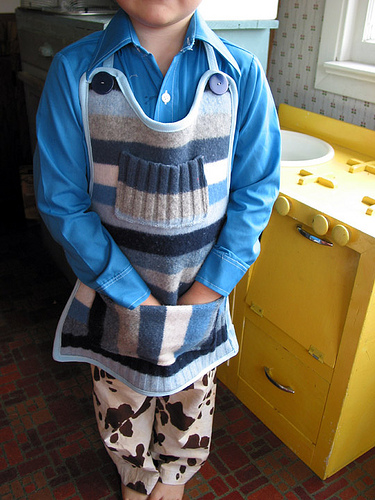
Michelle's sweater apron tutorial

Published by Lori Pickert on February 2, 2008 at 07:27 PM

greenkitchen-apron_tutorial.jpg


Check out Michelle's Sweater Apron Tutorial!

Children Make Sculpture

Published by Lori Pickert on January 27, 2008 at 05:27 PM

cms-1.jpg

I ordered this book after I saw Lena's copy.

cms-2.jpg


“This book attempts to show children involved in making sculpture. Their work does not have to be good, finished or artistic. What matters is the activity itself and the knowledge gained by the child…”

cms-3.jpg

This book was written in 1972. It is the work we did with children from 2000 to 2007, and it is the same message we tried to spread through our own work with children, workshops and conferences, and educational consulting.

It is not a new message. We are saying the same things that Elizabeth Leyh was saying in 1972; unfortunately they are still largely ignored. We were constantly having to explain to parents, education students, teachers, visiting administrators, etc., that what the children were doing was important and meaningful and a better use of their time than coloring in a mimeo book about apples or making a follow-the-directions craft.

rover.jpg

Many of the books that sustained me during the running-a-private-school years were written decades earlier. Yet the vast majority of the work with children that we observed in both public and private schools didn't reveal one one-hundredth of what we knew children were capable of doing, making, experiencing, and expressing.

That's not to say we shouldn't keep trying. What I'm trying to say is, we must keep trying.

painting_coral.jpg

In the studio: Works in progress

Published by Lori Pickert on January 10, 2008 at 10:11 PM

girlspaint.jpg

Wonderful reader Jill asks:

How do you corral the projects?? Do you let them sit out for an indefinite amount of time? When do the projects get thrown away, if ever? I want to encourage creativity, but it bugs me to have all the "pieces" spread out all over the place if making something takes longer than 5 minutes.

As Jill has already discovered, the only thing more beautiful than a basket of garbage is a room full of pieces of garbage taped to other pieces of garbage.

Of course, your child knows that the macaroni box taped to four soup cans is a turtle (or a lunar rover, or a brontosaurus, or a fax machine), and maybe even you know that (if s/he told you), but to everyone else, well, it's a look, yes, but maybe not the look you were going for.

How do you corral the projects? In the classroom, we had shelf space for ongoing projects, and we interspersed shelves filled with beautifully displayed art supplies with shelves filled with garbage, i mean ongoing projects.

At home, I have ongoing projects on top of the bookshelves, scattered across the table, and on the floor. SIGH.

a-turtlebuild1.JPG

At school, we dealt with ongoing work by sticking a Post-It note on it recording what it was (according to the maker) and their plans for it ("I will paint it", "Add eyes and nose", "Add Steering Wheel", etc.). We would reference those notes when reminding the child of the work they had planned to do and also when asking them if they were finished yet.

At home, with my two students, I don't usually have to put a Post-It on anything, but I do write down in my notebook anything they have planned so I can remind them later and also so I can make sure I get whatever they need from me to finish their project.

(I could never keep track of anything if I didn't have a designated homeschool journal/notebook.)

Do you let them sit out for an indefinite amount of time? Yes. The amount of time I let them sit out is definitely indefinite.

Let's talk ideal situation. Ideally, you are writing down what they are doing along with their requests for additional materials ("I need green and brown paint for the turtle's shell", "I need another soup can for my rover", "I need something silver for the top", etc.), their plans (see above), and their questions ("What goes on top of the rover?", "What does a turtle's tail look like?", "I need to look at the seatbelt in our car"). You use that information to keep things rolling:

"You said you wanted to see what was on top of the rover. Let's look on the internet."

"The green and brown paint you asked for is in the art studio. WEAR A SMOCK."

"Do you want to go look at the seatbelt in the car today?"

and etc. So, things are moving along. A project is done when the child says it is done. However, if it hangs around, the child may decide they want to do something more to it, which is a very good thing. In the classroom, children will copy each other's creations, which is an excellent thing. Child #1 makes something, child #2 copies it and adds something interesting, then child #1 goes back and wants to add it to his as well. It's all about extending the work. If you have more than one child, and they are close enough in age, maybe you can enjoy the same effect.

girls_paint_box.jpg

When do the projects get thrown away, if ever? Basically, things hang around until I'm sure the child is good and completely done with them or until I am convinced they have been completely abandoned or because I am in a bad mood and want the room to be clean.

(Guaranteed, if you throw something away, the child will ask for it the next day.)

(Buy black garbage bags for cleaning the studio. There is nothing like the face of a child who just found his or her beloved art project in the trash.)

I want to encourage creativity, but it bugs me to have all the "pieces" spread out all over the place if making something takes longer than 5 minutes. Ah, I feel for you, Jill. Rome wasn't built in a day, however, and neither is a lunar rover made from a macaroni box. It all takes time, and you just have to figure out a way to lessen the effects of helping your child become incredibly intelligent, creative, and expressive.

paint-turtle.jpgDesignate one shelf for ongoing projects. Make room for two or three things per child and that's it. If they want to make something new, they have to finish their old thing first.

Work with them, however, and facilitate their work by paying attention to what they say they want to do and supporting them (by reminding them of their plans, by giving them requested materials) so they can reach their goal. I repeat, it is all about extending the work. The more often they work on one particular thing, the deeper and more layered the knowledge will be.

When they are finished, help celebrate what they have accomplished. Take pictures of it. Show it to people: family members, friends, delivery people. Make a big deal about it; show them how impressed you are. (Don't be fake about it, though. Be sincere.) Kids see what is important to you and they want to impress you. Your attention is a powerful motivator.

In the studio: Storing recyclables

Published by Lori Pickert on January 9, 2008 at 02:57 PM

recyc_cab.jpg

Deidre is doing a series of posts about her top things of 2007, and last week she mentioned that she was feeling some guilt about something I'd written:

"I have a friend who saves every paper towel roll, etc., for her boys' craft closet, and when she told me that, I did feel a pang of guilt. Then I read Camp Creek Press's post about creating a kid-friendly studio and felt even more guilt . Of course I also read Peter Walsh's It's All Too Much last year, so I've found a compromise. I've given Aidan some space, where he can "collect" all the household found objects he wants for his creations---until the designated space is filled. Then you gotta use some before you add more. Because space is limited, even if buttons are not:-)"

paint_shelves.jpg

This made me laugh, because don't I know exactly what you mean, Deirdre! Frankly, all organization in the studio is a study in compromise, but recyclables are the worst. You may remember this picture.

It is easy to make most art supplies look beautiful: a clay mug filled with colored pencils, paint jars lined up in the sunshine, a wooden bowl filled with buttons. Ah, lovely.

It is much harder to make a pile of recycling look good. Also, it takes up an enormous amount of space in a classroom, where you are trying to keep enough materials on hand for more than a dozen children at a time. We solved that problem by filling an entire closet with recyclables on shelves.

In your home studio, you can keep less on hand at any one time. Honestly, any time you feel you are getting low on materials, you just have to save for a few days before you have a good pile going again. Unfortunately, it doesn't take much time at all to accumulate this much packaging.

The cabinet pictured up above is a holding area in the kitchen; we throw everything in there first. Later, we sort it out and carry it to the studio, where we try (I emphasize try) to keep it corralled in a couple of attractive baskets that, nevertheless, then look like attractive baskets filled with garbage.

recycl.jpg

You can try to hide these materials inside cabinets, but out of sight, out of mind, and if your child can't see them s/he probably won't make anything with them. This may put a gleam in your eye, thinking about opening the cabinet doors only on rainy Sundays, but I have to stand tall and represent for the kids: better to keep things out and visible for frequent making.

You can try to nest materials; I know I do. In fact, I would say I excel at recycling tetris. I know exactly which brownie mix box fits into which macaroni box which then fits into the ... you get the idea. And small things like bottle tops and cupcake papers can be thrown into a very large clear plastic jar, the better to see what's available and keep things from spilling across the floor.

Kids digging enthusiastically for a robot foot or a bulldozer part, however, will probably not adequately recognize or appreciate the methodical way you packed the materials to fit in the least amount of space. And so it expands and contracts. If you crave organization (and don't we all crave it? even if we never achieve it?), this may make you slightly insane.

In conclusion, it's not easy to keep just the right amount of things on hand. Variety is good — a variety of materials to choose from and a variety of activities that are available every day. Old macaroni boxes and egg cartons aren't particularly attractive, but they can inspire beautiful work.

fabric-plus.jpg

Great holiday books for kids: holiday favorites

Published by Lori Pickert on November 28, 2007 at 05:11 PM

magical.jpg

I've had such a great response to the last two days of book posts that I decided we'd have more book talk today! (It doesn't take much convincing to get me to talk about books. Anyone want a cup of hot chocolate?)

polar-1.jpg

I have a few less familiar (I hope) holiday books to share with you. Of course, I love The Polar Express. We read it every Christmas Eve. I love love love it. But everybody's heard of it. Maybe some of these will be new to you.

snowy-2.jpg

We love this beautifully illustrated book of Robert Frost's poem Stopping by Woods on a Snowy Evening, illustrated by Susan Jeffers. The dust jacket is vellum, with the cover gorgeously illustrated in a way that is simply uncommon today. This isn't a terribly long poem, but we read it very slowly, to enjoy looking at each picture. This book makes a lovely hostess gift; it can be enjoyed by adults and children alike.

perf-2.jpg

Another book with a vellum dust jacket (co-inky-dink) is Abbie Zabar's A Perfectly Irregular Christmas Tree. It's unfortunately out of print, but that won't stop me from bringing it up. It tells the story of a tree chosen for Rockefeller Center, and we love her illustrations.

(Abbie's book The Potted Herb makes a great gift or stocking stuffer for a gardener, and it's still in print.) Country Living magazine did a layout on Abbie's house and Christmas decorations a gazillion years ago and I've never forgotten it. In fact, I still have the issue! If I can find it (ha), I will share.

stranger-2.jpg

Back when the boys were small, some dear friends gave us Stranger in the Woods: A Photographic Fantasy. The title sounds a bit ominous, but it is really a sweet story illustrated with gorgeous photographs of snowy woods and woodland creatures. The boys loved it.

toot-2.jpg

Is everyone in love with Toot & Puddle, or is it just me? We don't even have all of their books; the boys are a little too old to snuggle down with one these days. I love I'll Be Home for Christmas.

katy-1.jpg

Oh, okay, one more mention of a pure classic before I go. No, not Snowy Day, although, hey, that's another good one! I'm giving a shout out to Katy and the Big Snow. I love all of Virginia Lee Burton's books, I think. What a great bundle to give a favorite little — Mike Mulligan, The Little House, and Katy and the Big Snow! (Is The Little House out of print?!) And just to round things up by getting back to the obscure, have you ever seen her book Life Story? No, it's not her autobiography — it's an amazing picture book telling the story of evolution.

Time to put the winter- and holiday-themed books in the basket by the wood stove, dig out the flannel lap quilts, and wait for the first snow.

Great holiday books for kids: read-alouds

Published by Lori Pickert on November 27, 2007 at 10:59 PM

jackdomiread.jpg

Okay, you aren't going to believe this, but once again I managed to piddle away the day and forget to take my photographs before the sun slipped away.

It was a beautiful day, too! Warm, and we continued trying to winterize the Airstream so it won't bust a pipe over our cold midwestern winter.

Thank you everyone for your book recommendations re: yesterday's post! We have an absolutely enormous home library, partially due to the fact that we are out-of-control biblioholics and partially due to the fact that when we closed my school we brought home a good section of the library (including doubles and triples of our favorites, because why not?).

Today I thought I'd continue the bookish theme and list some of our all-time favorite read-alouds.

Of course, these books are just as enjoyable read to oneself, but you know, there is just a perfect read-aloud book. Mm, what are the criteria. The chapters must be long enough that one or two make a good evening's read. Not too much cliff-hanging action at the end of the chapters, causing undue agony to small ones writhing in their beds begging to read "just one more!" (Mommy needs her sleep.) I like a read-aloud that sparks some good conversations. And, I suppose, the most important thing to me is that it be written beautifully, so that reading it aloud is a pleasure in itself.

Anyway, here are some of our top favorites. We've read all of these two or more times, no more frequently than once a year.

The Little House books. I've read all the way through the series three times. The first time I read them, Jack was so small (two, maybe?) that I didn't think he was really getting it, although he always lay quietly in the crook of my arm. Then one morning he told me he'd had a dream. I said, oh really, what was it? He said, "I dreamt Pa made eggs for me and Mary and Laura!" So I guess he was getting it, after all! Their top favorite of these books was Farmer Boy. I think my top fave is Little House in the Big Woods. The descriptions of the harvesting, butchering, and putting up stores for the winter! Farmer Boy is also a paean to everything gastronomical. My advice: don't read this if you're on a diet.

A farmer depends on himself, and the land and the weather. If you're a farmer, you raise what you eat, you raise what you wear, and you keep warm with wood out of your own timber. You work hard, but you work as you please, and no man can tell you to go or come. You'll be free and independent, son, on a farm.

Mother was frying doughnuts. The place was full of their hot, brown smell, and the wheaty smell of new bread, the spicy smell of cakes, and the syrupy smell of pies.

One of my favorites from my own childhood: Rabbit Hill. How I loved this when I was a child. I must have read it every year since I was five. The boys love it, too.

The houses were all asleep, even the Dogs of the Fat-Man-at-the-Crossroads were quiet, but the Little Animals were up and about. They met the Gray Fox returning from a night up Weston way. He looked footsore and sleepy, and a few chicken feathers still clung to his ruff. The Red Buck trotted daintily across the Black Road to wish them good luck and good morning, but Father, for once, had no time for long social conversation. This was business, and no Rabbit in the county knew his business any better than Father — few as well.

Another favorite from my own childhood (in fact, I read them my childhood copy) is Rascal. We have probably read this aloud at least once a year the last three or four years. They absolutely love this book.

My harmless skunks had further complicated matters on a recent Sunday evening. These pleasant pets that I had dug from a hole the previous spring were now more than a year old and somewhat restless. They were handsome, glossy creatures — one broad-stripe, one narrow-stripe, one short-stripe, and one black beauty with a single star of white on his head. All four had perfect manners. Having never been frightened or abused, they had never scented up the neighborhood.

But one night in June when Wowser must have been drowsing, a stray dog came barking and snarling at them through the woven wire, and they reacted predictably. Sunday services were progressing at the church not seventy feet from their cage. It was a warm evening, and the windows of the choir loft were open. For the first time in his life Reverend Hooton shortened his sermon.

I'm afraid they're perhaps (sob) getting a little too old for Winnie-the-Pooh, but we own the big treasury that has all the books and poems in one volume, and I have read it all the way through, front to back, several times. This book, by the way, would make a great baby gift.

By the time it came to the edge of the Forest the stream had grown up, so that it was almost a river, and, being grown-up, it did not run and jump and sparkle along as it used to do when it was younger, but moved more slowly. For it knew now where it was going, and it said to itself, "There is no hurry. We shall get there some day." But all the little streams higher up in the Forest went this way and that, quickly, eagerly, having so much to find out before it was too late.

Already mentioned yesterday, but worth mentioning again, we've read aloud and loved (more childhood favorites of mine) A Wrinkle in Time and A Wind in the Door. The rest of the L'Engle books they've read themselves, but these two we have read aloud several times.

"You mean you're comparing our lives to a sonnet? A strict form, but freedom within it?"

"Yes." Mrs. Whatsit said. "You're given the form, but you have to write the sonnet yourself. What you say is completely up to you."

This year we read aloud for the first time Treasure Island, and both boys absolutely loved it. I hadn't read it myself since I was a child and I had forgotten how exciting it was. A few weeks after we read it aloud, my older son sat down and read it again to himself.

He was plainly blind, for he tapped before him with a stick, and wore a great green shade over his eyes and nose; and he was hunched, as if with age or weakness, and wore a huge old tattered sea cloak with a hood, that made him appear positively deformed. I never saw in my life a more dreadful-looking figure.

Even though the boys are now 8 and 11, I still read aloud to them every night. They have been reading on their own for years, but they still love to be read to, and I love to read aloud to them. They also love to take their turns reading aloud. Sometimes meals (at which everyone is allowed to read, always — they were aghast to find out this wasn't allowed when I was growing up!) turn into a free-for-all with everyone trying to entertain everyone else with selections from their book.

I don't know what the secret is to growing great readers, but reading aloud can't hurt.

Great holiday books for kids

Published by Lori Pickert on November 26, 2007 at 11:07 PM

reading-rug.jpg

Well, it's five o'clock and all is dark in the midwest.

I didn't manage to photograph the thing I was going to post about today before the sun fell behind the trees, so instead, please enjoy these book recommendations from my resident experts.

The boys have just turned 8 and 11 in the past few weeks. If you have any middle-size kids to buy for this holiday season, even (or especially) those who hate to read, maybe these books will be just the ticket.

Of course the boys enjoy the Harry Potter series and D loved Lemony Snicket, although J found it too depressing. I have exposed D (now 11) to some classic fantasy fare like the Dark Is Rising series, which he enjoyed.

D loved Black Horses for the King, written by Anne McCaffrey.

Another classic series the boys both enjoyed was A Wrinkle in Time and the rest of the Time Quartet (which is strangely now the Time Quintet; they added An Acceptable Time — unfortunately quite a step down from the original three books, I think). The sets certainly are a good deal considering the cost of the individual books. However, the top two are definitely A Wrinkle in Time and A Wind in the Door.

They loved the Narnia series as well. I still have my original paperback set, and we must have about 12 copies of The Lion, the Witch, and the Wardrobe. (Did you like the movie? I was disappointed.)

J (now 8) has just finished reading The Lightning Thief, book one in the Percy Jackson series which both boys have enjoyed.

Speaking of which, D really liked Eragon (which, God help me, I read aloud) and its sequel Eldest (which I made him read to himself). Christopher Paolini, the smart and talented homeschooler who wrote these books as a teen, can get a little long-winded. If you are going to try reading these books aloud, I suggest throat lozenges.

Another favorite fantasy series was The Great Tree of Avalon and itssequels.

Your middle-size kid not a fantasy lover? You can't go wrong with the Wayside School boxed set. Or practically anything by Roald Dahl. Kid humor.

(Their favorite Roald Dahl book? The Wonderful Story of Henry Sugar and Six More.)

Our favorite poetry book (though it's hard to choose) is The 20th Century Children's Poetry Treasury. We've been reading aloud from this book since Dominic was two. We usually end our before bed read-aloud time with two or three poems; we pull favorites from this book most nights. (It has great illustrations, too.)

Classics? They both love The Phantom Tollbooth. (Who doesn't?) D urged J to read The Indian in the Cupboard and its sequels. Actually, D collected about a dozen books that he thought J should read this year and made a special shelf for them in their room; his picks included Tom Sawyer, The Adventures of Huckleberry Finn, The Story of King Arthur, The Adventures of Sherlock Holmes, Treasure Island, Kidnapped and King Solomon's Mines.

Finally, D’s favorite read this past year, real-life adventure Kon-Tiki. J’s favorite: Charlie and the Great Glass Elevator.

Pages