Camp Creek Blog

Tutorial: CD envelope

Published by Lori Pickert on November 25, 2007 at 02:04 PM

cd_env-1.jpg

I'm in kind of a NaBloPoMo coma. We are going to winterize the Airstream today. Then I am going to putter in the craft room with the boys and make some cards and ornaments, or we'll just pretend to make cards and ornaments while we watch movies.

So here's a look at the little project I did yesterday while browsing online. You might wonder how someone could read blogs and trace and cut at the same time; you just have to believe me that it can be done, as long as you're not in a hurry. I need to ponder what I read, after all.

And yes, this project is so simple it doesn't even need a tutorial, but hey, it's all I've got!

cd_env-1b.jpg

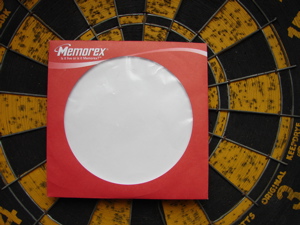
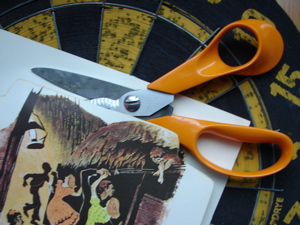
Start with a CD envelope/sleeve. These come with the software for your computer, your camera, computer games, etc. You should be able to find one somewhere in your house.

cd_env-2.jpg

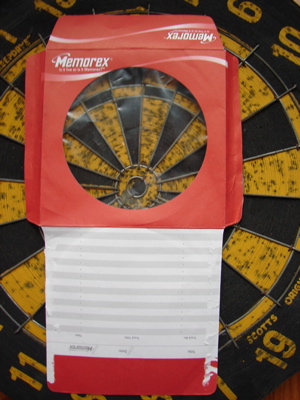
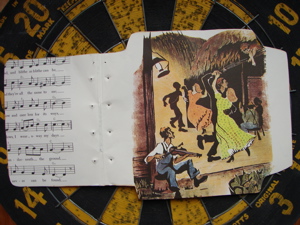
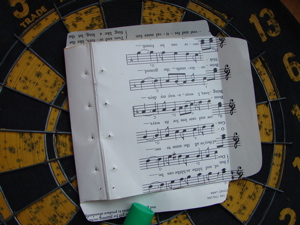
Carefully peel it apart and open it up. Now you have a template.

cd_env-4.jpg

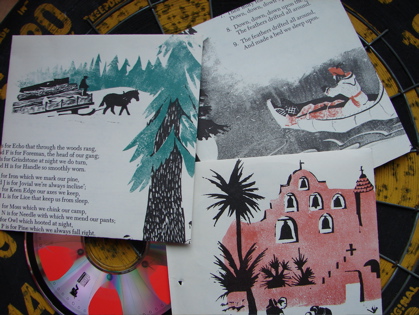
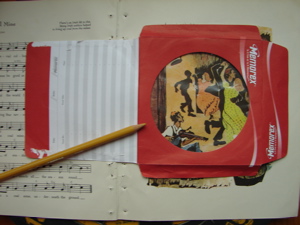
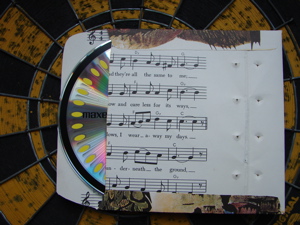
Lay it on the paper of your choosing and trace it with a light-color pencil. I used pages from a vintage children's music book that I bought at the thrift store for a quarter. The cover was ruined and the pages were falling out. (I still had a hard time cutting it up. If you want to preserve a book, you can also make color copies of the pages you want or take a digital photo and print it out on an ink-jet printer. Your template will fit on a regular 8 x 11 sheet of paper.)

cd_env-5.jpg

Cut it out.

cd_env-6.jpg

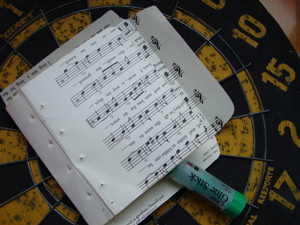
This is the good side. Now flip it over.

cd_env-7.jpg

Fold up the bottom. Note the "top" has the biggest flap. Refer to your template if you get confused.

cd_env-9.jpg cd_env-8.jpg

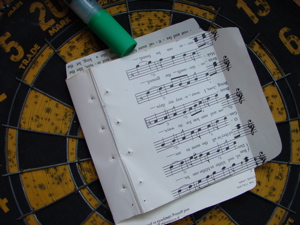
Apply glue to the two side flaps and glue them down.

cd_env-10.jpg

Groovy!

cd_env-11.jpg

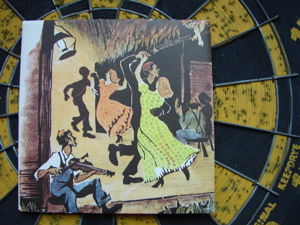
And there's the front, to which you can now add a title however you wish — alphabet stamps, Sharpie, etc. If you are using plain decorative paper (e.g., scrapbooking paper), you can print out your CD title and song list (if it's for music) or text (if it's for photographs) before you cut, fold, and glue.

Hope you enjoyed that little project. Have a great Sunday!

Keeping it holly & jolly

Published by Lori Pickert on November 24, 2007 at 08:26 PM

orm-cinnstick.jpg

The less we try to do during the holidays, the more we enjoy the season. Because, you know, a party doesn't just take that one day. There are the days you clean, the days you decorate, the days you order food or cook or bake or all three, the days that you stress because your homemade wreath that expresses just how you feel about the holidays doesn't look like the one on the cover of Blueprint.

I'm not even going to get into guest lists, finding the holiday platter you were sure you put in the high cupboard but it's not there, and guiltily shifting some of the ornaments the kids hung on the tree because the clumping is ruining your overall effect of elegant insouciance.

It's not just the one day, it's a whole lot of days, in a holiday season that for me often feels like the giant hourglass on the Wizard of Oz. Or Days of Our Lives. Anyway, an ominously large hourglass.

I'm not trying to discourage entertaining, just pointing out that when you take on a commitment, you're usually looking at the bright, shiny tip of the iceberg — for instance, that four hours that your warm, glowy house will be filled with laughter and well-dressed friends lifting their glasses in cheer. You blissfully forget the looming bulk of the iceberg hiding 'neath the blue water, representing all the hours and days you'll need to spend to get to those happy four hours.

Taking on one major commitment during the holiday season may be worth it, but how many of us stop at one? What is it that impels us to make a complicated gift from scratch, sign up for three cookie exchanges and a handmade swap, agree to help out with a church or school event, decide this year is the year we'll show the kids the true meaning of the season by donating time to the local shelter, and somehow get pressured into the neighborhood's progressive dinner, all in the same month?

After all, we can have a big party any time of the year. We can teach the kids about giving back to the community any old month. (Actually, they need you more in February.) People will always call and ask you for help, because you're so busy, you ooze success at getting things done. (If you say no, they'll call the next person on their list.) What makes us decide that we have to do all these things, right now, this month?

Have you ever had a minor illness and experienced how luxurious it is to just lay around and do nothing? Imagine Santa brought you something you didn't even know you needed — a sprained ankle, or maybe a ever-so-slightly detached retina. (Does that hurt?) And suddenly you were just left at home by yourself (with your family, of course) and no commitments, because you're not allowed to go out. You just have the fire, the softly falling snow, your favorite music on the stereo, and your family, who are relaxed and happy because they're not being yelled at asked to clean something, move something, hide something, or stay away from something every 10 minutes.

Now that's a good present.

And the Grinch, with his Grinch-feet ice cold in the snow, stood puzzling and puzzling, how could it be so? It came without ribbons. It came without tags. It came without packages, boxes or bags. And he puzzled and puzzled 'till his puzzler was sore. Then the Grinch thought of something he hadn't before. What if Christmas, he thought, doesn't come from a store. What if Christmas, perhaps, means a little bit more. — Dr. Seuss

Beautiful holiday book: Letters from Father Christmas

Published by Lori Pickert on November 23, 2007 at 08:16 PM

fc-1.jpg

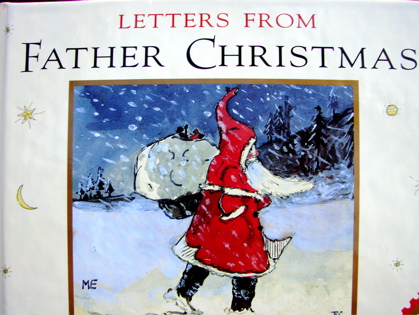
I cannot overemphasize how much I love this book: Letters from Father Christmas.

fc-2.jpg

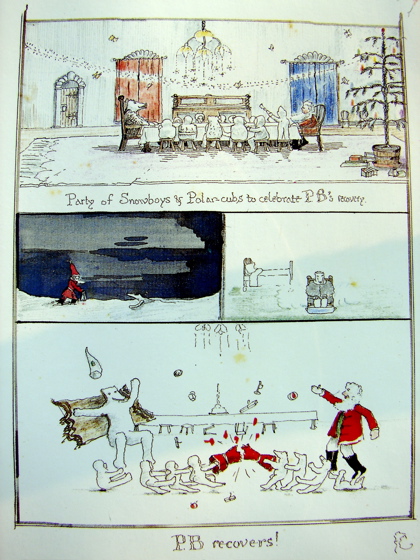
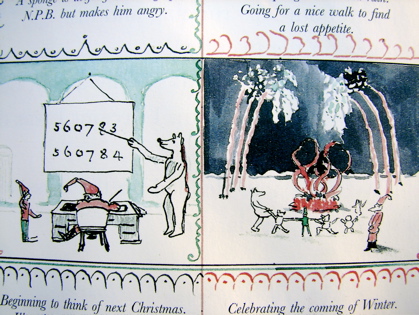
The book is a collection of letters that author J.R.R. Tolkien wrote to his sons as Father Christmas. They tell droll stories of FC's trials and tribulations getting ready for the holidays, and they feature one of our now-favorite Christmas characters, the North Polar Bear.

fc-5.jpg

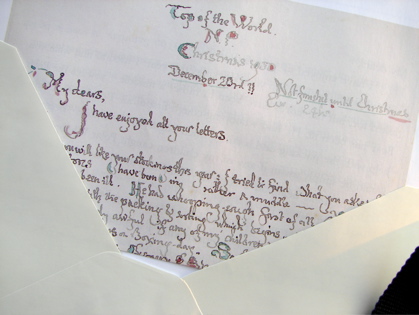
The letters pull out of real envelopes glued into the books (a la Griffin and Sabine) and reproduce Tolkien's handwriting and original drawings; the other pages have captioned drawings.

fc-3.jpg

The drawings are so charming, the stories so funny, and the whole concept so loving that it has become one of our absolute holiday favorites. If you love beautiful books, if you love Christmas, you can't possibly not love this beautiful, wonderful book.


fc-4.jpg

In the studio: Free for the taking

Published by Lori Pickert on November 22, 2007 at 01:24 PM

girlspaint.jpg

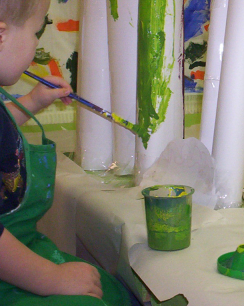
As we discussed with clean recyclables, once you have begun to acquire items for your studio, you will develop a practiced eye.

You don't have to shop only in the arts and crafts aisle of your local department store.

Every time a piece of paper passes through your hands, think — is this something the kids could use? Tissue paper, bits of wrapping paper, cardboard inserts, the silver disc that seals your new tin of coffee.

jack-octopus.jpg

When you open a new package, whether it's cookies or a kitchen appliance, take a second look at those pieces that hold everything inside for shipping. Whether it's hard plastic or soft foam, if it's clean with no sharp edges, if it has an interesting texture, set it aside.

In your office, think about file folders, binder clips, address labels, envelopes, tags, graph paper.

In your kitchen, think about paper plates, styrofoam bowls, plastic spoons, silver cupcake wrappers, leftover holiday napkins, empty spice tins.

In your garage, think about large flat washers, nuts, bolts, plastic garden pots, twine, empty spools.

At work, look at the things that are regularly thrown away. (Or at your friend's workplace. Or at the stores you frequent.) We've collected empty film canisters, bottle tops, cardboard squares, shredded paper, "mat middles" from the local framing place. ("Mat middles" are the squares of mat board that are left when a mat is cut — great for drawing, painting, or constructing.) We've been given plastic lids, linoleum squares, jewelry boxes, packing peanuts.

milkcarton_robot.jpg

It doesn't take many helpers to get a good supply of materials coming in — a couple friends, some grandparents, and you're well on your way to a stocked studio. Once people have an idea of what you're looking for, they will delight in bringing you odd bits and treasures.

These things you gather aren't only pieces of future constructions (bird eyes, alligator tails, robot arms, race-car wheels) but also things to cut up and collage and even exciting new things to paint with or paint on.

Any type of fabric (old sheets, cut-up burlap, etc.) can be an intriguing new surface to paint on at the easel, as well as any sort of odd paper or cardboard or even wood. Old plastic kitchen tools, fake plastic credit cards that come in junk mail, old plastic coils, etc., make great painting tools. Anything with an interesting texture can be pressed into clay or playdough.

Only your imagination limits the things you can bring into the studio, and once you've limbered up those thinking muscles, you'll be surprised by how much raw creative material is sitting around, just waiting for you to pick it up.

fabric-plus.jpg

In the studio: Advanced inventory

Published by Lori Pickert on November 21, 2007 at 02:36 PM

rover.jpg

Most of the items on the basic inventory list are familiar enough that your children (or students) won’t get overly excited and start burning through your supplies.

If you create a special place in your home or classroom just for making art, you may find them so charmed by the idea that they are intensely interested in these old, familiar objects.

If you already have an art area or studio, you may find that simply rearranging the materials and presenting them thoughtfully (and beautifully) re-energizes their art-making.

(Have you ever tried to clean out your child’s room, with the goal of getting rid of some old toys that are no longer played with, only to find that simply by pulling them out and dusting them off, you’ve made them intensely interesting again?)

As you build your studio, you can take your children’s art making to the next level. Remember, the more variety in materials, the better their representations will be. Their choices are limited by what you have available. Everything you do to enhance their choices increases their learning opportunities.

charcoal.jpg

Advanced Inventory:

• oil pastels (brighter, more intense colors than crayons, blendable, can use with watercolors to make a resist)

• charcoal

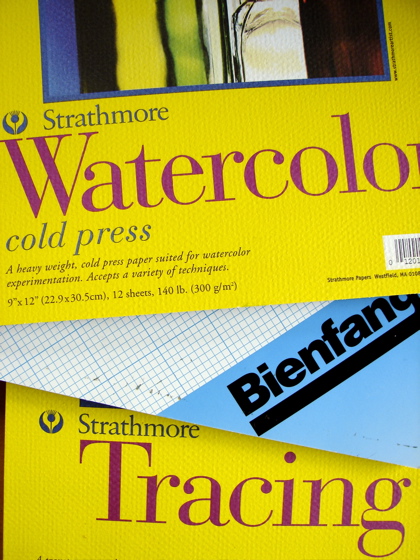
• specialty papers (tracing paper, watercolor paper, etc.)

• hole punch

• Cellophane tape (warning: the average four-year-old uses 10,000 miles of cellophane tape per year, if allowed)

• stapler (swim at your own risk — always supervise small children)

• acrylic paints (for painting structures) (beware: not washable — wear old clothes and smocks)

• beads, plastic lacing (beads can also be strung on yarn, string, pipe cleaners, wire, etc.)

• buttons et al.

• cotton balls

• pipe cleaners

• wire (ends can be sharp and poky — always supervise)

• large selection of tapes: duct tape (in different colors including metallic), electrical tape (colors), packing tape — all of these are great for making paper and Tyvex costumes and decorating cardboard structures and models

• fabric (cut into random squares and rectangles of different sizes for dress-up/costume and model making; smaller scraps for the art studio)

making.jpg

There’s almost no limit to the things you can add to your studio, many of them from other areas of your home. Take a look through your garage and junk drawers for leftover bits and knobs off things that you can offer them. Found papers, odd pieces of cardboard and styrofoam, old padded envelopes, and so on — all of it can become something amazing when combined with a child’s imagination.


The wider the range of possibilities we offer children, the more intense will be their motivations and the richer their experiences.
— Loris Malaguzzi

In the studio: Basic inventory

Published by Lori Pickert on November 21, 2007 at 02:24 AM

tableprints.jpg

A reader asked

Okay, so if you had to give a list, for a mama of say, three young boys. A list of great art materials that one must have (in addition to all the great stuff you listed in your last post) What would it be? We have a few oil pastels, some chalk pastels. Some watercolor and tracing papers. Some acrylics and watercolors, a BIG chunky pad of drawing paper.

But here I am with THREE 40% off coupons from [a big-box art store], and I really want to get some good quality stuff for creating and hide it away for Christmas. Ideas?

Great question! To review, we talked here about starting the year with some basics, which you can offer in large supply:

coloredpencildraw.jpg• pencils

• pencil sharpener and white vinyl eraser

• paper (copy paper is great for everyday drawing: bright white, nice texture, and 500 sheets to a package!)

• markers (various colors, thin and thick)

• clipboards (one per kid, for taking drawing materials on field trips, in the car, on the couch, in the yard, etc.)

• kid scissors

• white school-type glue

• old magazines, maps, found paper, leftover gift wrap — anything collage-able

• clean recyclables (boxes, cardboard tubes, plastic lids, etc.)

• popsicle sticks

• yarn (cheap stuff)

paint-1.jpg • masking tape

• natural items: leaves, twigs, pinecones, acorns, shells, etc.

• large pad of easel paper (I like the double pack they sell at Staples)

• watercolors (I prefer Prang; they are more expensive but last a long time)

• tempera paint (you can get by with just primary colors plus white to start)

• good drip-proof paint cups with lids (if you put a different brush in each cup it will minimize mixing/dirtying the paint — although that is inevitable, so give them a small amount to start ;o)

With these items, you've got the basics for drawing, painting, collage, and building structures.

Tomorrow I’ll give an advanced list.

In the meantime, with your 40% coupons burning a hole in your pocket, my suggestions for enhancing your studio (thinking of getting the most out of your coupon) would be:

• large set of high-quality brand colored pencils (they offer much better and more varied colors than the basic Crayola set)

• very good-quality electric pencil sharpener (when you use a lot of pencils, this is a blessing to get them all back into shape again quickly)

easel-1.jpg• set of Derwent or similar drawing pencils of different weights — excellent for observational drawing and encouraging drawing in general

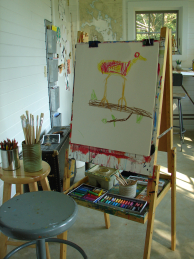
• easel if you don’t already have one (preferably two-sided with a shelf — i’ve found these on sale at school-supply stores and big-box stores)

• loom

• large pads of nice drawing paper

• perhaps a large pack of tempera paints, if they sell them bundled (maximizing the coupon!)

It's difficult to think of pricier items for stocking the art studio, since most things are fairly inexpensive! The above are more long-term investments. For more of a short-term thrill, check out my Holiday Gift Ideas for Your Child Artist.

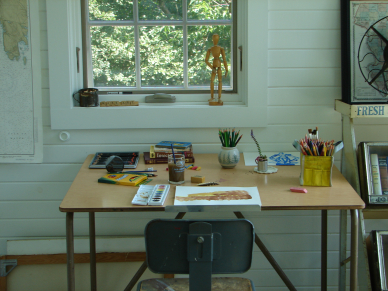
Finally, one of the most important things you need for your basic art studio is a place to make art. This isn't necessarily something you can buy at a store.

You need to have a space where your children can work and you won’t be a nervous wreck about them destroying the table, the floor, the walls, etc. Maybe all you need is a plastic tablecloth to throw down under the easel, and you're fine. Or maybe you need a table where you won’t have to worry about glue or paint leaving its mark.

artinprogress.jpg

This problem extends to the co-op and classroom as well, where some groups have carpeted rooms (!) and no safe place to paint.

We have had great success with garage-sale wooden tables, sawing the tables off to make them the appropriate height for the children who will work there.

Plastic tablecloths can be used to protect floors but they can be slippery — I like good old-fashioned canvas dropcloths. You can buy them at any hardware store or big-box lumber or home renovation store.

Whatever your solution, it’s no use stocking up on great supplies if you’ll hesitate before saying yes, we’ll make some art today. Ideally, art supplies are always available and there’s always a place to work.

studio-1.jpg

Holiday gift ideas for your child artist

Published by Lori Pickert on November 19, 2007 at 03:05 PM

canvas.jpg

In the coming week, I'm going to focus on the art studio, our basic inventory, more advanced inventory, and how to store and display your materials.

Most of the large art-supply stores offer weekly coupons in the newspaper and online; they also honor each other's coupons! Tomorrow, my post will be about some nicer items you can add to your studio when you can take advantage of a sale or coupon.

Today, I have some suggestions for holiday gift ideas for your young artists. Another great use for the coupon!

• sketchbooks (small for field work, larger sizes for working at home)

Bundle with a small field bag (you can sew yourself if you are handy), a plastic enclosed pencil sharpener, pencil case with pencils, small magnifying glass, a couple of small guide books, and you have one of my favorite presents of all time.

• high-quality markers/marker sets

These markers will make everyone who sees them want to sit down and draw. They’re brighter and have more varied colors than typical children’s markers.

• scratch-board kits with tools included

My sons love to do scratch art; the boards are kind of pricey and fall into special gift territory for us. You can also make your own boards once you have the tools.

• small canvases with a set of acrylic paints

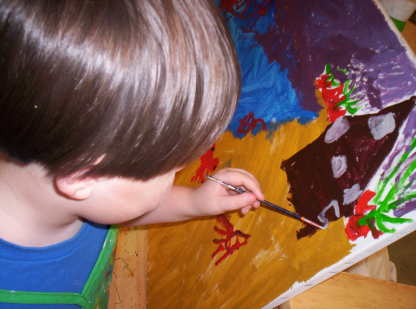
Canvases are available in every possible size and in bundled packages. Inexpensive craft-store acrylic paint sold in small bottles is fine for painting on these.

Stocking stuffer ideas:

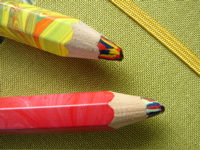
multicoloredpencils.jpg• metallic pencils (for the best Star Wars drawings, robots, machine designs) (great on black construction paper)

• glitter glue (a favorite of kids everywhere)

• fat multicolored pencils

• tiny sketchbooks

• mini staplers with colored staples (great for tiny book-making)

• fancy-edge scissors

Finally, here are some of my favorite children's books about art and artists:

The Yellow House

The Boy Who Drew Birds: The Story of John James Audubon

My Name is Georgia

Frida

Degas and the Little Dancer (and the others from the Anholt’s Artists series)

Story Painter

Henri Matisse: Drawing with Scissors

A Bird or Two

Tar Beach

Leonardo

Artist to Artist: 23 Illustrators Talk to Children about their Art

Leonardo da Vinci

This is by no means an exhaustive list, just some of our favorites!

Priorities

Published by Lori Pickert on November 19, 2007 at 01:45 AM

unfinished.jpg

Above, an unfinished ornament for one of the boys. Will I feel guilty when I cross-stitch "2004" on it? No way.

As I spent today enjoying myself with family instead of writing a blog post, I'm going to enhance this post with one of my favorite little zen stories. You've probably already heard it, but it's still good.

Stephen Covey relates this story in his book First Things First:

In the middle of a seminar on time management, a lecturer said, "Okay, it's time for a quiz." Reaching under the table, he pulled out a wide mouthed gallon jar and set it on the table next to a platter covered with fist-sized rocks. "How many of these rocks do you think we can get in the jar?" he asked the audience.

After the students made their guesses, the seminar leader said, "Okay, let's find out." He put one rock in the jar, then another, then another--until no more rocks would fit. Then he asked, "Is the jar full?"

Everybody could see that not one more of the rocks would fit, so they said, "Yes."

"Not so fast," he cautioned. From under the table he lifted out a bucket of gravel, dumped it in the jar, and shook it. The gravel slid into all the little spaces left by the big rocks. Grinning, the seminar leader asked once more, "Is the jar full?"

A little wiser by now, the students responded, "Probably not."

"Good," the teacher said. Then he reached under the table to bring up a bucket of sand. He started dumping the sand in the jar. While the students watched, the sand filled in the little spaces left by the rocks and gravel. Once more he looked at the class and said, "Now, is the jar full?"

"No," everyone shouted back.

"Good!" said the seminar leader, who then grabbed a pitcher of water and began to pour it into the jar. He got something like a quart of water into that jar before he said, "Ladies and gentlemen, the jar is now full. Can anybody tell me the lesson you can learn from this? What's my point?"

An eager participant spoke up: "Well, there are gaps in your schedule. And if you really work at it, you can always fit more into your life."

"No," the leader said. "That's not the point. The point is this: if I hadn't put those big rocks in first, I would never have gotten them in."

I've got my big rocks ready. Hope yours all get in this year.

Holiday resolutions

Published by Lori Pickert on November 16, 2007 at 09:46 PM

martha.jpg

Holiday Resolutions, 2007.

I will not make a holiday village out of gingerbread and royal icing.

I will make sugar cookies and let the kids decorate most of them.

I will not make my own, fabulous yard decorations out of dried grapevine and fairy lights.

I will let the boys hang the loud, multicolored lights they like.

I will not make all my gifts.

I will lay on the floor and watch "Rudolph the Red-Nosed Reindeer" and "The Grinch" with the boys.

I will not take the boys to see "The Nutcracker".

I will play board games with them on the floor under the tree.

I will not organize a ski trip for friends and family.

I will sled with the boys in the backyard.

I will not take a special holiday portrait of the kids and send it out to friends and family with tasteful letterpress cards.

I will recycle a vacation picture and order 29-cent cards online. And I'll send half as many as last year.

I will not take tins of homemade cookies and fudge to our friends, neighbors, and service people.

I will invite my friends over to eat cookies and hang out.

I will not go to a different party every weekend.

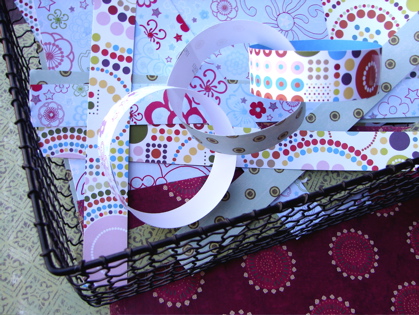
I will stay home and make paper chains.

paperchains.jpg

In the studio: Rationing art supplies, part 2

Published by Lori Pickert on November 15, 2007 at 12:47 PM

paper.jpg

I want my children to have high-quality art materials. It shows my respect for their work and, in turn, they treat it more seriously.

That said, if they create 15 paintings in a row, that is a lot of watercolor paper. Can I afford this?

(Multiple by 20 for the classroom version!)

508822-1153635-thumbnail.jpgIn order for children to work with the best materials, they must learn to work with them as a real artist does. They must learn that before we do an important work, we sketch. We think about what we want to make. We plan. Then we get out the nice materials, when we are ready to do the important work.

It's okay to make mistakes and need more paper, more paint. But when we are exploring and sketching and thinking (with our brains and with our paintbrush), we want to use "regular" paper.

It's also okay to explore with nice materials -- seeing what ink can do on thick paper, how watercolor paints work differently on lovely textured paper. But we name what we are doing, and we make sure that we respect the good materials and don't waste them.

Even small children can fit several sketches onto a piece of paper, then let their teacher (or parent) know that they are ready to paint. This process respects the material, the work, and the artist.

banner-coffeeguy.jpg

There is a idea that some adults have about children — and it is quite persistent — that children lack control. Youth = immaturity = lack of control. In reality, children can learn to negotiate complex situations and relationships at a very young age. Rather than controlling everything, and parsimoniously eking out the good paper and the best paints, we can help children recognize the value of these things. The children can then move freely in the studio (and in the world), making good choices based on real knowledge, rather than being always at some tall person's mercy, always wishing for more buttons.

Pages